Platform on window, door, frame technology, hardware, roof and facade technology, security
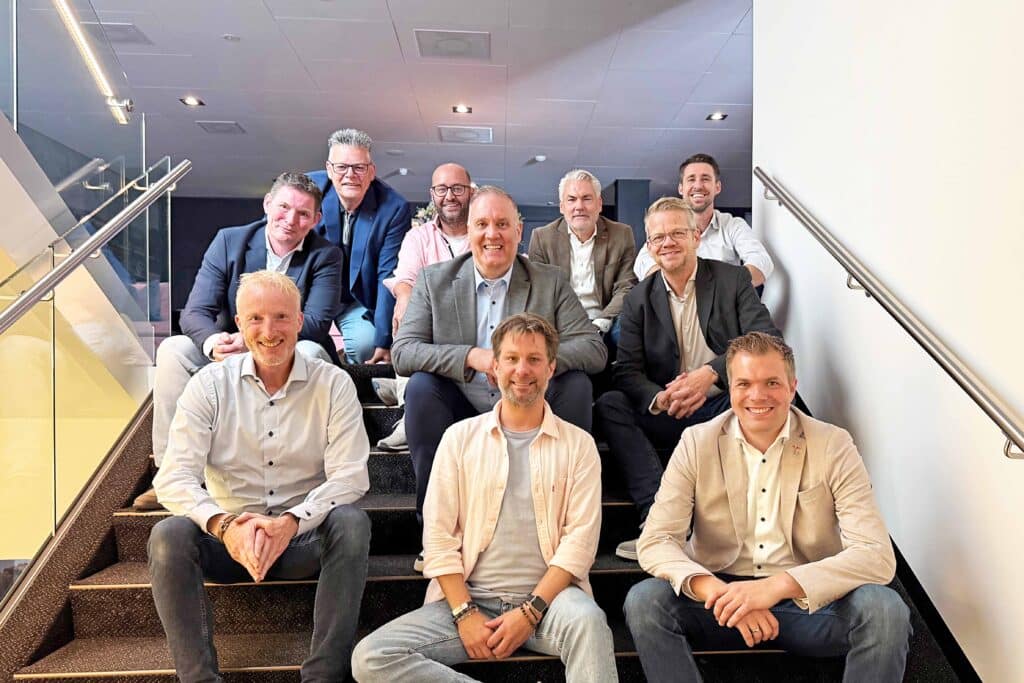
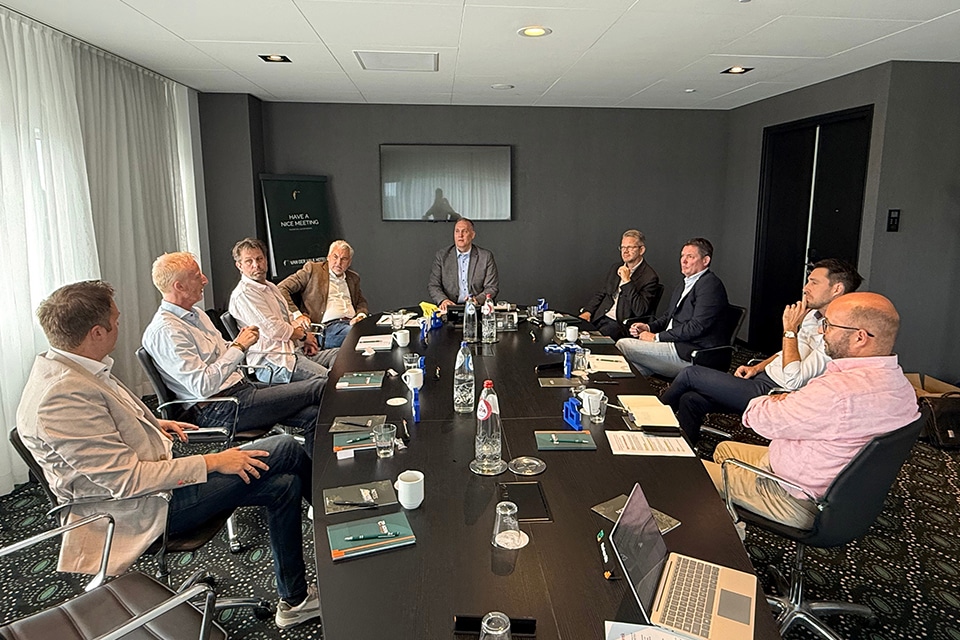
The construction and manufacturing industries face a mounting array of challenges. Skilled workers are in short supply, knowledge is at risk of being lost, AI is changing the way work is organized, and regulations regularly present companies with new challenges. How can the industry remain agile and internationally competitive under these circumstances? During a roundtable discussion held as part of PROFIEL’s 20th-anniversary celebration, four thought-provoking propositions were put on the table. From the ‘secret’ to retaining staff to the question of whether the government is now hindering rather than helping. The answers vary, but one common thread emerges: those who want to move forward will have to take responsibility themselves and be willing to collaborate.
According to the participants, retaining staff doesn’t start with a standard HR policy, but with listening. What one employee needs to stay engaged may actually have the opposite effect on another. For some, job satisfaction means above all freedom and responsibility. They perform better when they are not constantly monitored, but are given the space to make their own choices and are held accountable for the results. Others, on the other hand, need clear guidelines and want to know exactly what is expected of them.
The key, therefore, is to approach employees as individuals. This requires conversations and genuine attention to what matters to each person. Professional development also plays an important role in this. Education, training, and the opportunity to take on different responsibilities within an organization can offer employees a sense of direction. That doesn’t necessarily mean the same thing for everyone, though. Not every employee needs training or a next step; some simply want to continue excelling in their current role.
What stands out is the participants’ willingness to accept a different reality: good employees don’t always stay. Those who develop strongly may eventually move on to another position or organization. That doesn’t necessarily have to be viewed solely as a loss. In this way, knowledge and experience circulate throughout the industry. Retaining staff, therefore, does not necessarily mean keeping everyone within the same framework, but rather offering flexibility where possible, providing clarity where needed, and facilitating professional growth.
Is the labor shortage a problem the industry has brought upon itself? The participants find that statement too simplistic, but they do acknowledge their own responsibility. For years, society has primarily valued theoretical education, while practical and technical work received less recognition. At the same time, during previous crises, the sector lost workers who subsequently did not return.
The evolution of the work itself also plays a role. Automation makes production more efficient, but it can make traditional craftsmanship less visible. Whereas a craftsman used to make a product from start to finish, he may now operate a machine that carries out a large part of the process. According to the participants, the challenge is to make technology and craftsmanship attractive again.
To achieve this, companies must also take action themselves. Those looking to hire cannot wait for young people to come forward on their own. It is essential to establish contact with vocational schools, training programs, and industry organizations. Smaller companies, in particular, may need to collaborate to achieve sufficient scale.
At the same time, existing knowledge must be put to better use. The industry relies heavily on employees who sometimes have decades of experience. That knowledge should not be lost the moment they leave. Documenting it and making it accessible can help new employees get up to speed more quickly. This creates a direct link to AI, the topic of the next discussion.
So, the shortage is not just an external problem. The industry itself must rethink the appeal of the profession, its connection to education, and the way knowledge is transferred. The goal is not only to resolve the current shortage but also to prevent the same problem from arising again in five or ten years.
While AI was, until recently, mainly seen as something for the future, the roundtable discussion revealed that it is at the heart of the participants’ day-to-day operations. They see opportunities above all, but emphasize that companies don’t all have to reinvent the wheel on their own. Developments are moving so quickly that knowledge sharing on this topic is also becoming increasingly important within the industry.
According to the participants, the greatest benefit lies not in using a single specific tool, but in reevaluating processes. Which activities add little value? Where are the repetitive tasks? And which tasks can be automated so that employees have more time for work that requires experience, judgment, and professional expertise?.
According to the table, this means that AI is much more than just a handy text generator. It supports customer service, administrative processes, maintenance predictions, and making business knowledge accessible, but it also helps detect anomalies in the production process. One interesting example that was suggested is a kind of ‘level system’ in which employees are assigned a specific AI level and can then advance. AI thus becomes part of professional development. Suggestions include offering a ‘prompting’ course and a subscription to an AI tool as a form of ‘modern tool.’.
At the same time, there is a clear warning. AI can provide convincing-sounding answers that are incorrect. Verification and critical thinking therefore remain essential. Expertise isn’t going away, but it may take on a different role. The participants therefore view AI primarily as a means to make better use of existing knowledge and to reorganize processes. In their view, anyone who regards it solely as a standalone tool is missing out on a large part of the development.
The last statement is causing the most of a stir. Some of the participants can relate to the frustration. There are many rules, and in their view, ambitions and implementation don’t always align. Housing construction is cited as an example: there is a demand to build large numbers of homes, while, for instance, limited capacity in the power grid can hinder implementation.
Sustainability requirements are also mentioned. According to the participants, there is sometimes a lack of a long-term vision. Policy decisions have consequences that extend far beyond a single political term, while the necessary infrastructure and enabling conditions are not always developed simultaneously.
At the same time, the argument is qualified. The industry cannot place all the responsibility on the government. Companies must themselves comply with requirements regarding, for example, CE marking and environmental data. Moreover, it is not just a matter of the number of regulations, but also of enforcement. According to the participants, if products from outside the Netherlands do not meet the same requirements, this could create an uneven playing field.
The issue of society’s own responsibility also comes up for discussion. After all, the government is elected by citizens. This makes it too simplistic to view it solely as an adversary. However, the participants do call for the establishment of a voter threshold. The political landscape is currently very fragmented, and that does not contribute to effectiveness, according to the participants.
Overall, the discussion primarily shows that the government and the industry are interdependent. The government must provide clear, workable, and long-term frameworks. At the same time, the industry must take responsibility and actively participate in the discussion to clarify what does and does not work in practice.
If we compare the four statements side by side, we see that the question ‘collaborate or let everyone take their own responsibility?’ doesn’t actually have to be a contradiction. To remain effective and internationally competitive as an industry, both are necessary. Companies will have to make their own decisions about how to handle personnel, knowledge development, and AI, but some issues are too big to solve individually. The industry can achieve more by sharing knowledge, taking a united approach toward the education sector and government, and exchanging experiences with new technology. “Strong together” is the motto.
Special thanks to: Bas van den Eerenbeemt (Gealan), Erwin de Voys (Deceuninck), Jurgen Rensen (Venster Techniek), Marco Pels (Fuhr Benelux), Ronald van Driel (Geze Benelux), Pascal van Meerten (Buva), Arjen Veltman (VKG Quality Mark), and Joska Hissink (Siegenia).
The roundtable discussion was moderated by Jerry Helmers.