Platform on window, door, frame technology, hardware, roof and facade technology, security
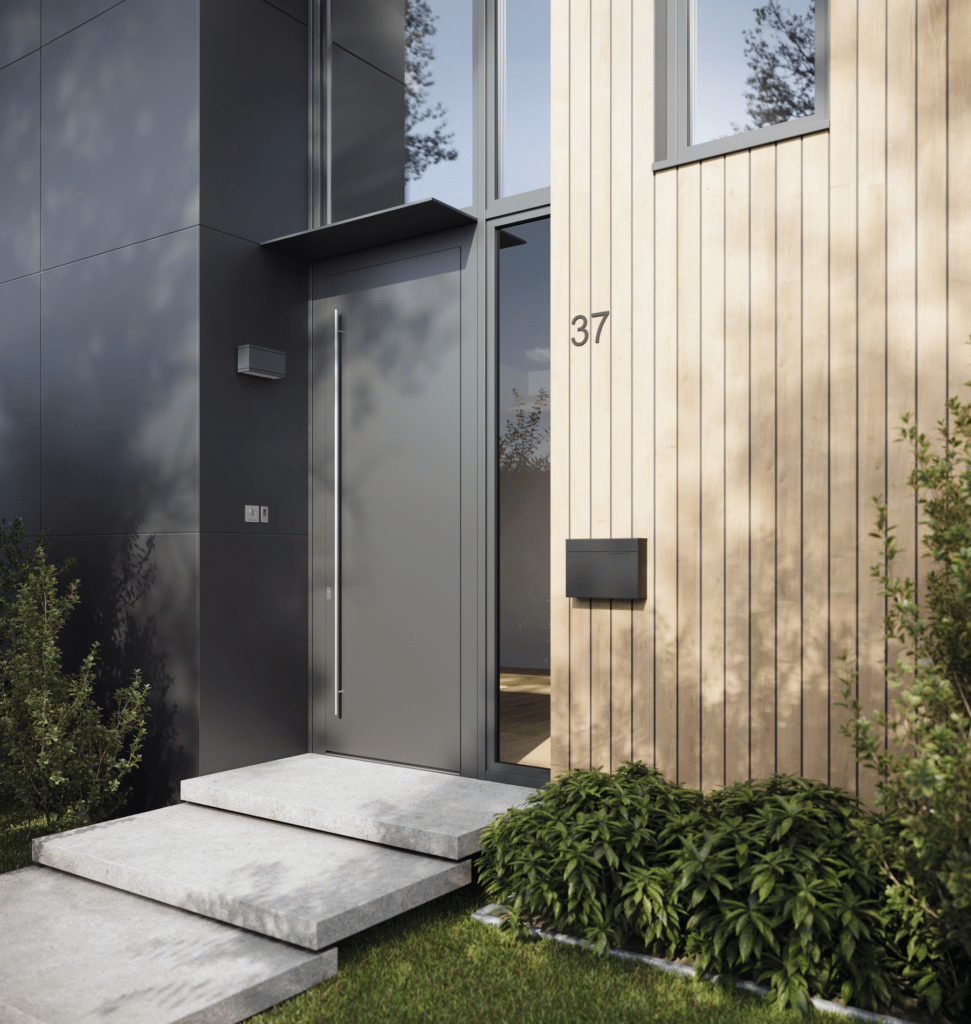
These days, an entrance door is more than just an entrance door. It ‘must’ be capable of more than just opening and closing. Of course, security remains the foundation, but ease of use, maintenance, automation, and efficient operation are playing an increasingly important role. In particular, the combination of mechanical locking and electronic access technology is making door designs more versatile. For manufacturers and installers, the challenge lies in creating systems that are technically capable without unnecessarily complicating production or installation. Because… there is one thing on which no compromises can be made: convenience is what matters most.
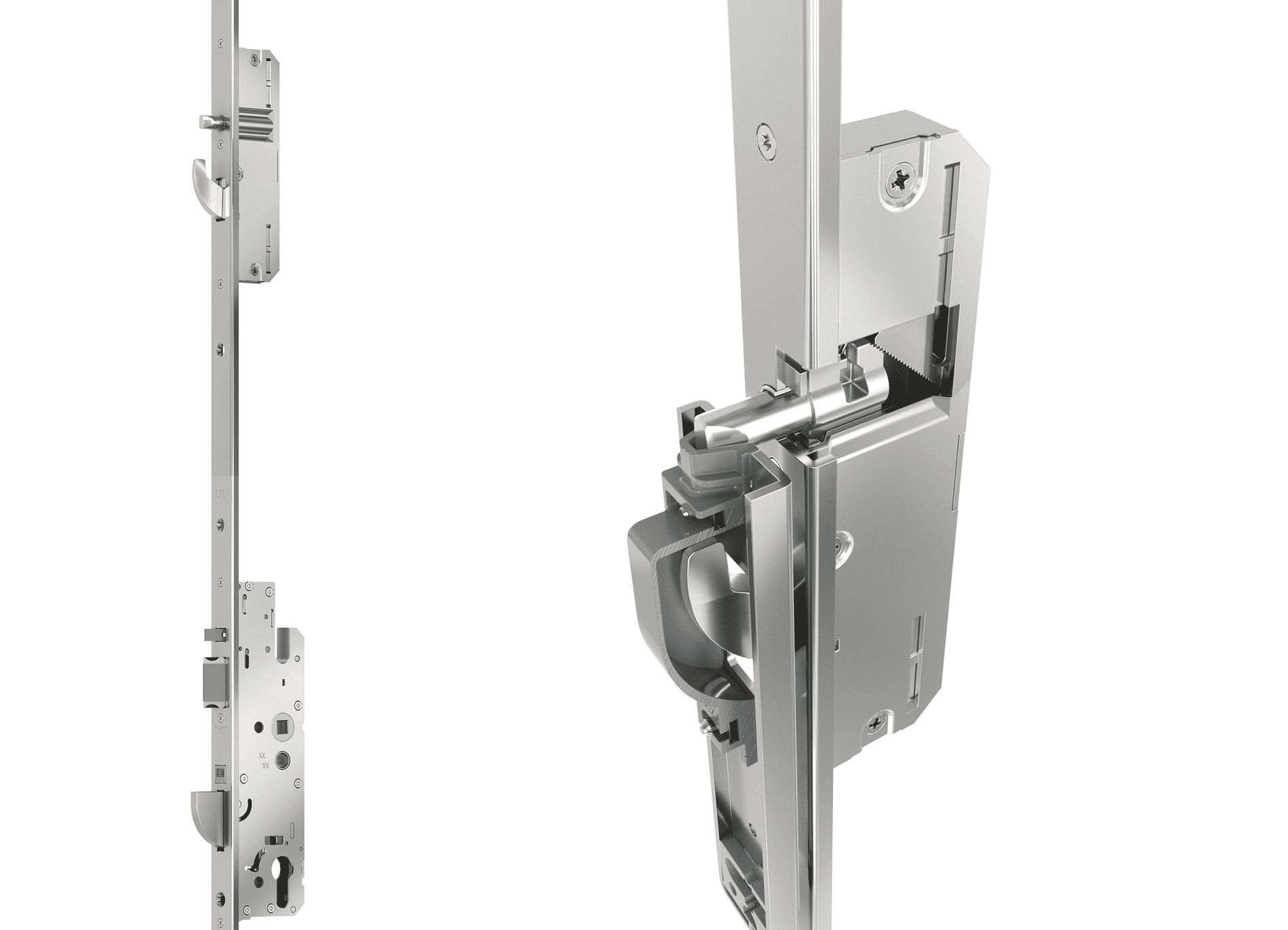
Within the KFV program, SIEGENIA brings together various types of multi-point locking systems: key-operated, handle-operated, automatic, and electromechanical solutions. This allows each project to determine the required level of security, comfort, and automation. The basic principle remains the same: a door is locked at multiple points, while electronic components are increasingly adding additional features.
Joska Hissink, who is responsible for sales in the Netherlands, explains: “One example of this is the automatic BS 3700, which features a self-adjusting latch. Changes caused by tolerances, heavy use, or slight warping of a door therefore do not automatically require service. The door leaf remains secured to the frame at multiple points. For the installer, it is particularly important that the system is suitable for wood, PVC, and aluminum doors and offers various expansion options.”
For example, according to Joska, an automatic multi-point lock can be unlocked electromechanically using an A-opener. This allows for integration with, for example, an intercom, a fingerprint scanner, or another access control system. For fully motorized applications, GENIUS offers options for electronically controlling locking and unlocking and integrating these functions into existing building or access control systems.
“Even with electronic access technology, the mechanical foundation remains relevant. For example, a door must remain functional during a power outage, and in commercial buildings, additional requirements may apply to exit and panic doors. The product line therefore includes solutions that can still be operated manually via the cylinder, as well as variants that meet the requirements of EN 179 and EN 1125. The choice of a locking system, therefore, does not start with electronics, but with function, usage scenario, and required security.”
According to Jóska, the fact that the technology is becoming more advanced does not mean that the processing has to become more complicated. “For carpenters, it must above all be easy to work with. ”Plug-and-play“ is the foundation,” he says. “That principle is reflected in the modular structure of our product line. Consistent dimensions and machining allow us to use different types of fasteners without having to change the entire production process every time.”
As a result, the focus is shifting more and more from individual locks to complete door systems. Mechanical security forms the foundation of these systems; electronics add convenience, access control, and integration capabilities. This can be beneficial for both new construction and renovation projects, as functionality can be expanded at a later date.
Hissink concludes: “Consumers don’t ask what brand of hardware is inside. They just want it to work. It’s really that simple.” For the professional, that’s exactly the challenge: applying technology that functions reliably, is efficient to install, and leaves room for tomorrow’s requirements.
Neem dan rechtstreeks contact op met SIEGENIA GROUP.
 Contact opnemen
The SIEGENIA GROUP offers an extensive range of products that make windows and doors valuable. With the TITAN, ALU and PORTAL product groups, as well as AERO and DRIVE, the company is among the world's leading providers of hardware, ventilation and building technology. KFV also covers the entire field of modern locking systems for doors. The full range is rounded out [...]
Bekijk Bedrijfsprofiel