Platform on window, door, frame technology, hardware, roof and facade technology, security
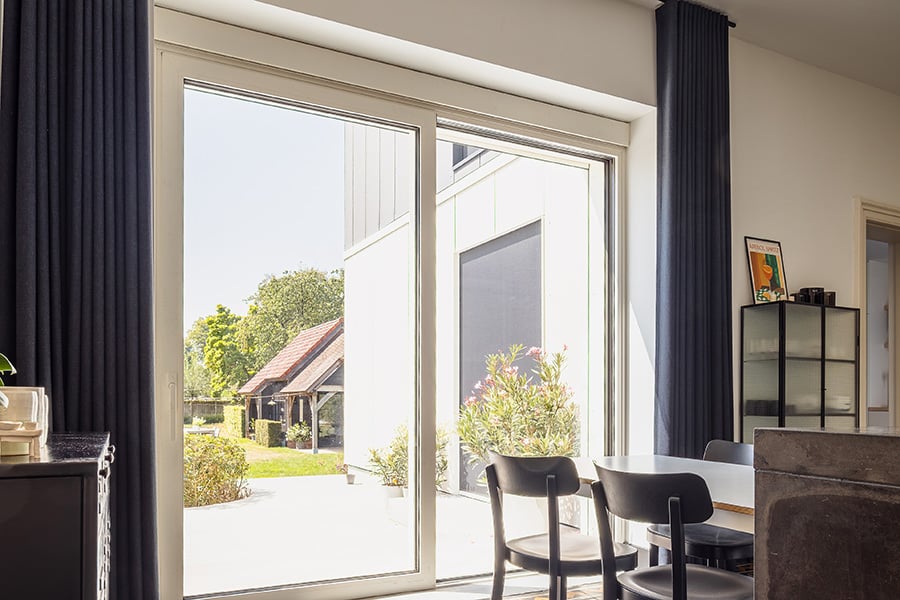
Solar shading plays an increasingly important role in the energy management of buildings. With stricter requirements for overheating, comfort and energy performance, keeping out solar heat is no longer an afterthought, but an essential part of the architectural design. Window frame manufacturer HEBO from Hengevelde, Twente, is actively responding to this with window frames that fully integrate solar shading, roller shutters and window ventilation. Director Norbert Kuipers explains why he believes this step is inevitable.
According to Kuipers, the movement toward integrated solutions comes directly from the market. “Buildings are becoming better insulated and glass surfaces are getting larger. At the same time, we have to deal with regulations such as the TOjuli requirement. That means you have to think about shading and ventilation already in the design. A loose window frame is then no longer sufficient.”
HEBO sees it as its role to bring those various disciplines together. “We have traditionally been strong in prefabricated frame solutions. By integrating blinds, shutters and ventilation already in our factory, we take a lot of work and uncertainty out of the construction process.”
An important part of the new offering is the HEBO screen. Kuipers especially emphasizes the aesthetic gains.
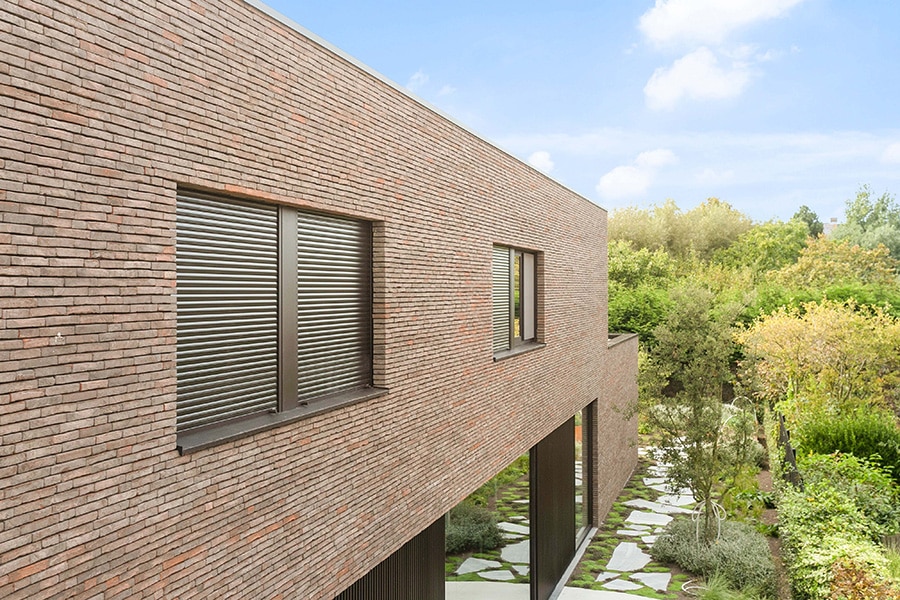
“We work with surface-mounted screens and shutters; these are now nicely concealed behind the facade. Whether the façade is made of masonry, stucco or wood: on the outside, you don't see any large eye-catching cabinets.”
On the inside, on the contrary, the cabinet is neatly finished in the various colors and accessible. “This applies to both wooden and plastic frames. Maintenance remains easy and the whole thing looks chic.”
All screens feature ZIP technology. “The fabric is fixed in the guides and therefore cannot blow out. This makes large dimensions possible. The screens allow us to apply large dimensions. That makes these screens very suitable for large glass panes and sliding doors.” ➞
The integration of screens fits seamlessly with HEBO's prefabrication philosophy. “The screens are already mounted on the frame in our factory,” says Kuipers. “Frames and cavity laths are built directly around them. For the contractor, this means that the element can be included in the shell construction as a single unit.”
Interior finishes are also coordinated in advance. “The interior cabinet is included in the finish with the frame or wall. That prevents surprises on the construction site and contributes to a tight delivery.”
A common concern with integrated blinds and shutters is airtightness. Kuipers firmly dismisses that doubt. “We have extensive tests and certificates for this. The impact on airtightness is minimal.”
He gives a concrete example: “If a HEBO window frame reaches 800 Pascal, then the impairment due to an integrated screen or shutter is about 50 Pascal. So you are still left with a window frame of 750 Pascal. These are excellent values, even for high-rise buildings or projects on the coast.”
In addition to screens, HEBO is also introducing the HEBO roller shutter. “The philosophy is the same: fully integrated, prefabricated and with a high insulation value,” says Kuipers. “Whereas screens primarily block out sun and heat, roller shutters provide complete blackout, extra privacy and additional insulation. “The maximum dimensions are slightly lower, to about 3 meters wide and 2.5 meters high, but the added value is great.”
All roller shutters and screens are equipped with motor control as standard. These are suitable for operation by remote control or cell phone as well as integration into the home automation system. Comfort and ease of use are very important today.
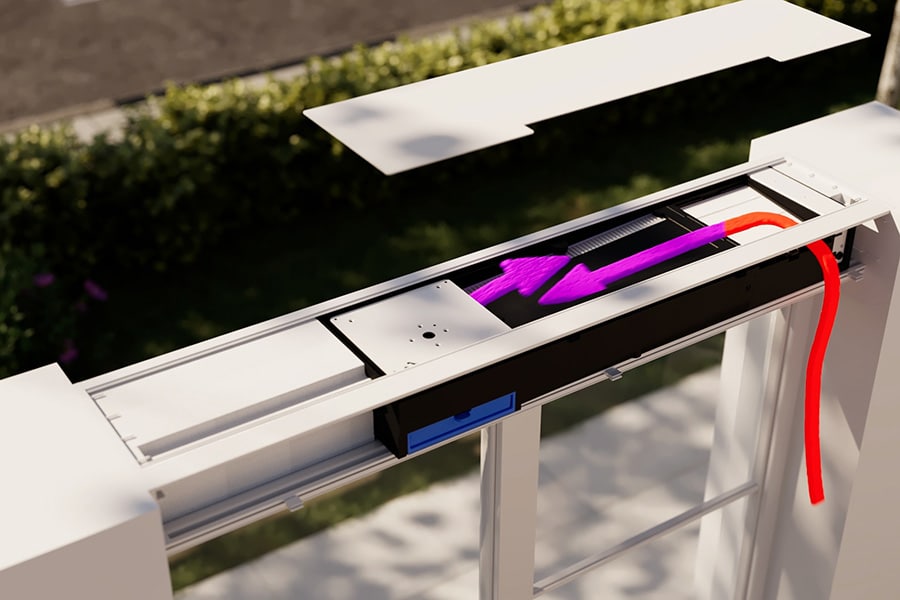
The third pillar of the new concept is integrated window ventilation with heat recovery. “Ventilation is essential, especially as homes become increasingly airtight,” Kuipers says. “But you want to do that without losing comfort and energy.”
The system works decentrally, room by room. “That means no air ducts are needed through the house. It's ideal for renovations and phased new construction because you easily include ventilation when installing or replacing window frames.”
At the heart of window ventilation is heat recovery. “Up to 75 percent of the heat from the exhausted indoor air is used to heat the fresh outdoor air,” Kuipers explains. “This keeps the inside comfortably warm in winter, while still continuously refreshing.”
In summer, the system offers additional flexibility. “Then you can choose night cooling, where the air does not pass the heat exchanger. That way you cool the house naturally, without air conditioning.”
Acoustics and air quality are also major pluses. “The system operates whisper quietly and is equipped with high-quality filters against fine dust and pollen. The air is also evenly distributed via the so-called Coanda effect, without a draught sensation.”
With the introduction of integrated screens, roller shutters and ventilation, HEBO emphatically positions itself as a total solution provider. Kuipers sums it up: “The window-frame sector is moving towards integral concepts. By bringing these functions together in the window frame, we deliver a solution that contributes to energy performance, comfort and building speed.”
According to him, this is only the beginning. “Awnings, shutters and ventilation are no longer accessories, but full-fledged architectural elements. By cleverly integrating them, we make buildings future-proof.”