Platform on window, door, frame technology, hardware, roof and facade technology, security
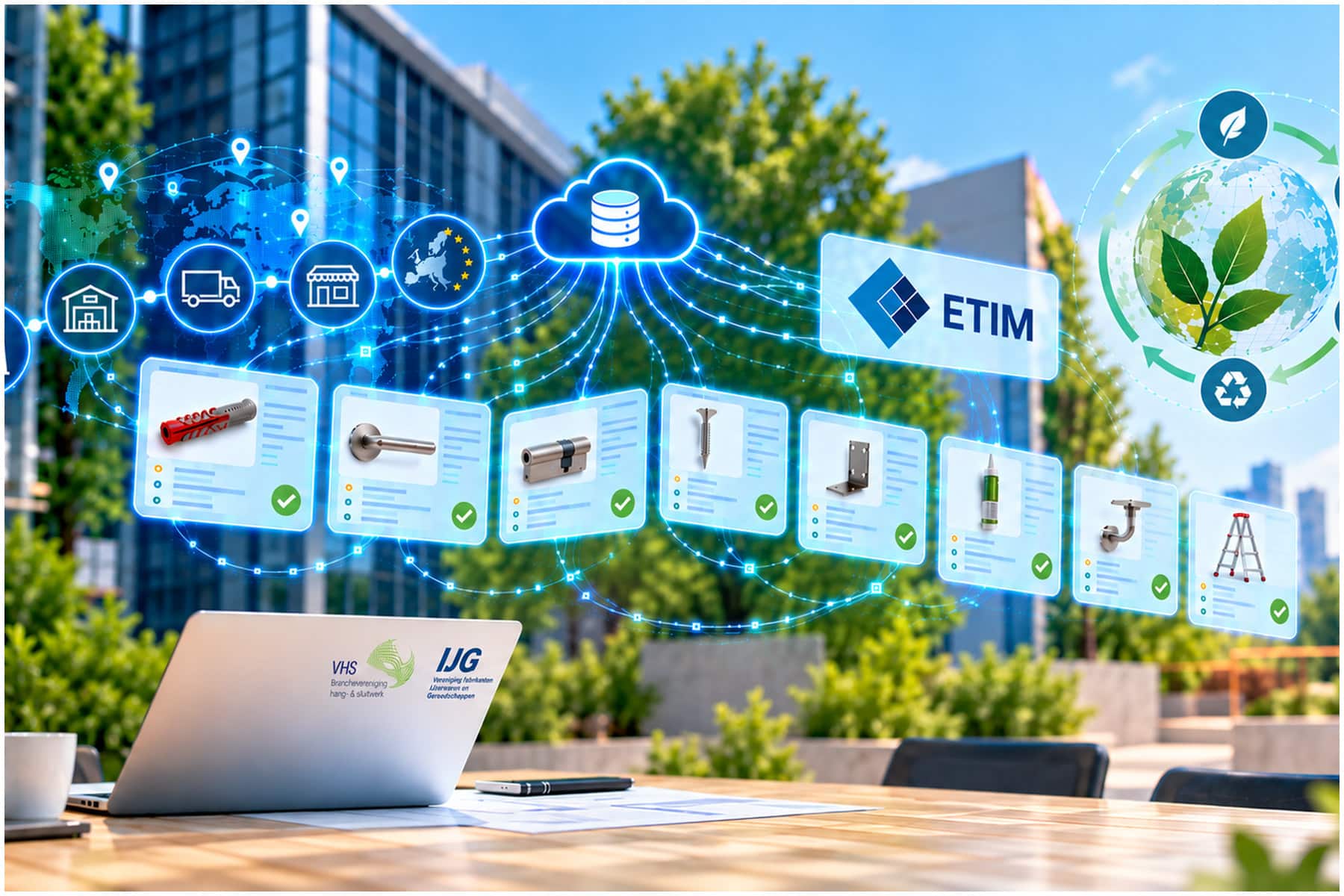
Collaborative project explores how new digital technologies can support ETIM classification and help companies prepare for new European information requirements
The hardware, tools, and fasteners and locks sector is taking the next step together in the digitization of product information. Industry associations VHS and IJG, together with manufacturers and suppliers, Ketenstandaard Bouw en Techniek, 2BA, and 2enable, are launching an innovation project to investigate how new digital technologies can accelerate the classification, verification, and updating of product data.
The volume of digital product information is increasing rapidly. At the same time, European laws and regulations are driving the need for complete, reliable, and digitally exchangeable product information. As a result, it is becoming increasingly important for manufacturers and suppliers to have greater control over their product data and to be able to use it efficiently for different customers, applications, and markets.
ETIM is used worldwide to unambiguously classify technical products and describe their characteristics. However, classifying and updating large numbers of products still requires a great deal of work.
A more standardized structure for product information can also help make it easier to exchange information with other companies, markets, and countries
This presents opportunities for companies that operate internationally or are seeking to establish connections from related sectors, such as the construction and engineering sectors.
As part of the project, an analysis and validation environment is therefore being developed, with the working title ETIM-neXt. The project is investigating how modern techniques can analyze supplier data, assist in classifying products, and identify missing characteristics or values.
“Manufacturers are facing an ever-increasing volume of digital product information and new requirements regarding how that information is recorded and shared. Through this project, we are investigating how modern technologies can help organize the preparatory work more efficiently, so that experts have more time for substantive evaluation.”
Arjen Koole, Director of the VHS and IJG Trade Associations
An important aspect of the project is its connection to circular product information and future European information requirements, including the Digital Product Passport (DPP). By properly structuring product information and processing it more efficiently, we create a better foundation for collecting, managing, and exchanging this data.
“The next step in digitization comes from intelligently linking standards, reliable data, and new technology. Ketenstandaard and 2BA want to work with the market to ensure that product information is also ready for future developments. This project clearly demonstrates how collaboration between industry organizations, standards, technology, and market players can accelerate innovation.”
Wim Willems, Managing Director of 2BA
During the first phase of the project, real-world data from various manufacturers and suppliers will be used. The results will then be evaluated by subject matter experts and the relevant market stakeholders. In doing so, the focus is not only on the technical capabilities but also on what the approach means in practice for managing, classifying, and exchanging product information.
The first phase began in September 2026. On November 24, the initial results and practical experiences will be shared during a meeting with suppliers in the industry. The participating pilot companies will demonstrate what the new approach means in practice and what opportunities they see for further standardization and digitization of product information within the sector.
The project is being carried out by the industry associations VHS and IJG, in collaboration with Ketenstandaard Bouw en Techniek (ETIM Nederland), 2BA, 2enable, and various manufacturers and suppliers, including AMI, Altrex, Gebroeders Bodegraven, Fischer Benelux, Hermeta Metaalwaren, Tremco CPG, and dormakaba.