Platform on window, door, frame technology, hardware, roof and facade technology, security
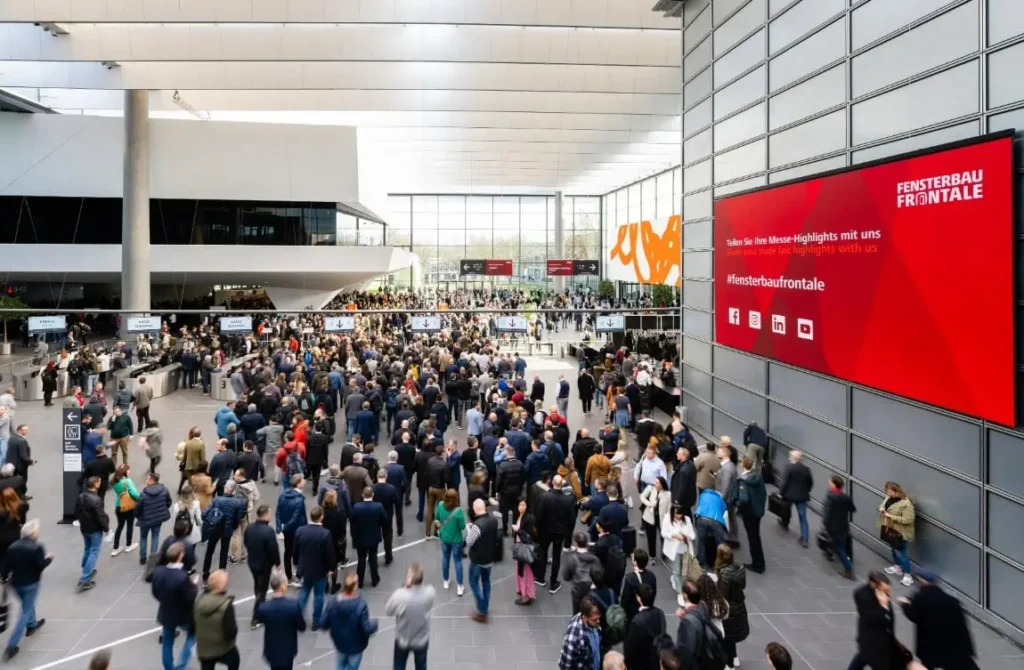
Fensterbau Frontale once again demonstrated where the window, door and facade industry stands today - and, above all, where it is moving. Innovation, digitization and ease of use are clear common threads, with manufacturers and suppliers responding to both technological developments and regional market needs. In this afterthought, several companies share their key insights, product introductions and vision for the future of the industry.
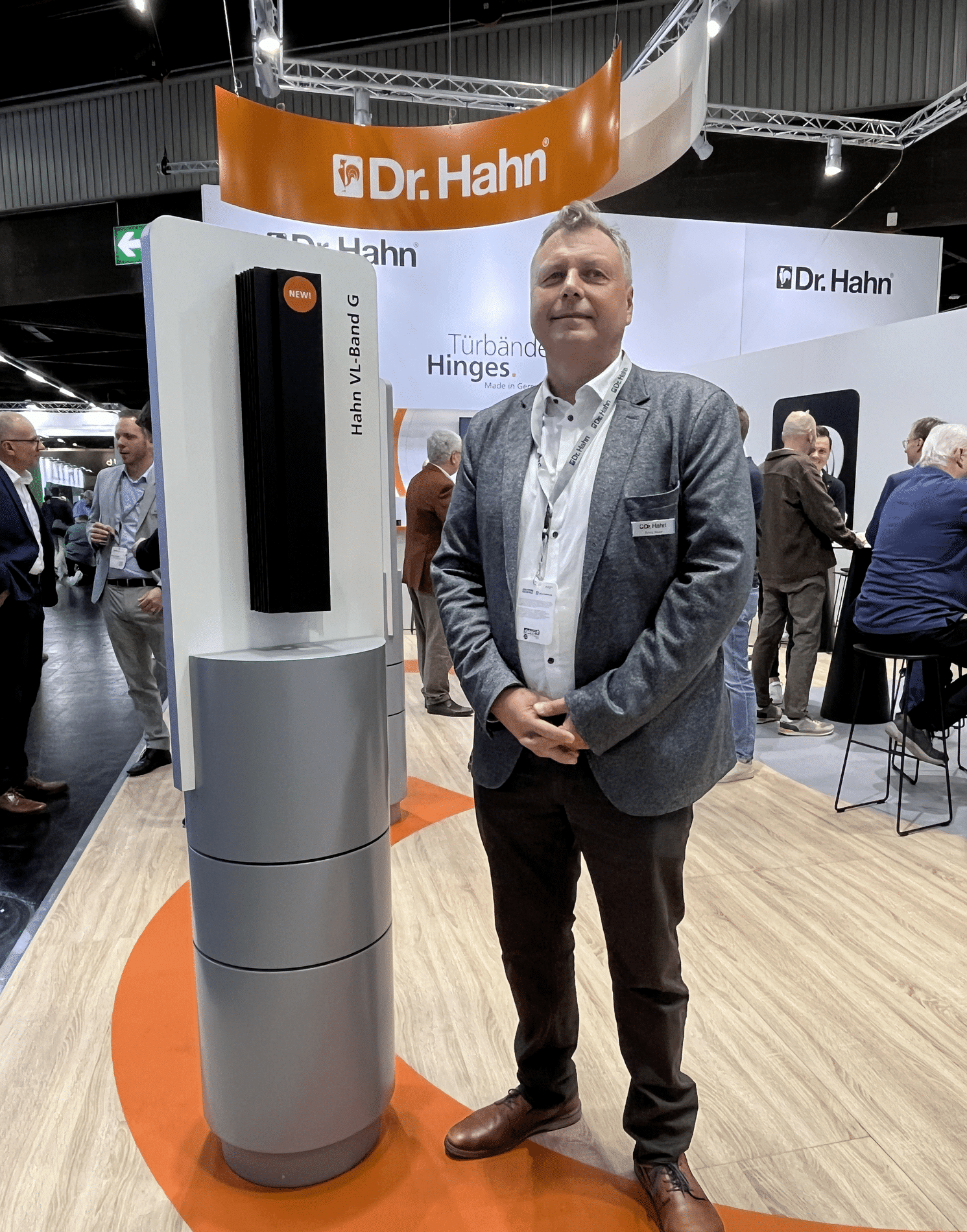
“At Fensterbau Frontale, the focus for us is clearly on the further development of hinges for aluminum profiles,” says Tonny Maes, sales representative at Dr. Hahn. “We have particularly focused on applications for doors with a surface-mounted situation and clamping grooves. This allows us to use both cylindrical hinges and fully concealed hinges on the same profile.”
According to Maes, these are precisely the innovations that are currently receiving the most attention. “These are the two new products that we are showing here and in which we are investing heavily to bring them successfully to the market.”
He emphasizes that these developments are strongly related to regional differences in Europe. “The further south you go, the more often people work with slimmer window profiles for doors, with an upstand situation and clamping grooves. In northern Europe, on the other hand, you more often see flat doors without those grooves. That requires a different fastening technique.”
Dr. Hahn is responding directly to this with its new solutions. “With our VL band G - where ‘VL’ stands for concealed and ‘G’ for groove - we make optimal use of those clamping grooves. That makes it possible to mount these systems reliably and efficiently even in those specific applications.”
According to Maes, the reactions at the fair confirm the relevance. “You notice that there is a demand for solutions that match local construction methods. We respond to that in a very targeted way.”
At the end of Fensterbau Frontale, satisfaction prevailed at OnLevel with the way the company was able to communicate its vision. According to sales manager Marco Bleffert, everything revolved around one central message: “Innovation only has value when it really makes everyday work easier.” That approach was clearly evident in the presentation of the balustrade systems and the associated digital tools. Bleffert saw particular interest in solutions that combine speed with reliability. Systems like Turboflex, he says, demonstrate that time savings and quality can go hand in hand: “Installers can work considerably faster, without making concessions on safety or appearance.” It is precisely this balance that proves decisive in practice.
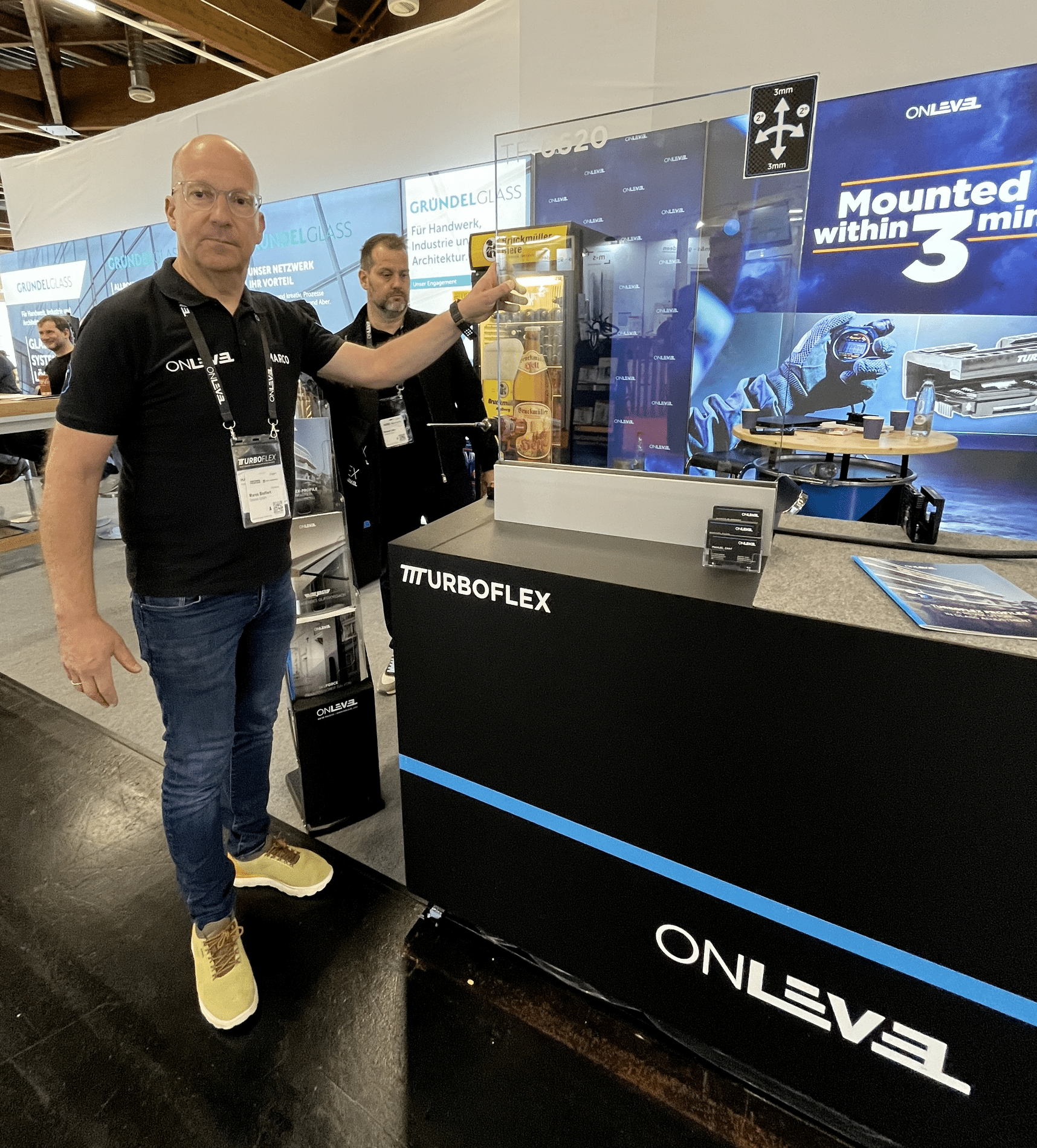
In addition, digitization played an important role. With ONLEVEL Studio, the company is betting on an integrated approach from design to order. “We remove uncertainties and give users more control over the process,” Bleffert said. That translates into fewer errors and a more efficient workflow. Although standardization and prefabrication are key, he says flexibility remains essential. “Our systems are designed to be easily adaptable to project-specific requirements.” The conclusion after the show is therefore clear: “Our goal is to make our customers” project work easier and that is exactly what has been confirmed here."
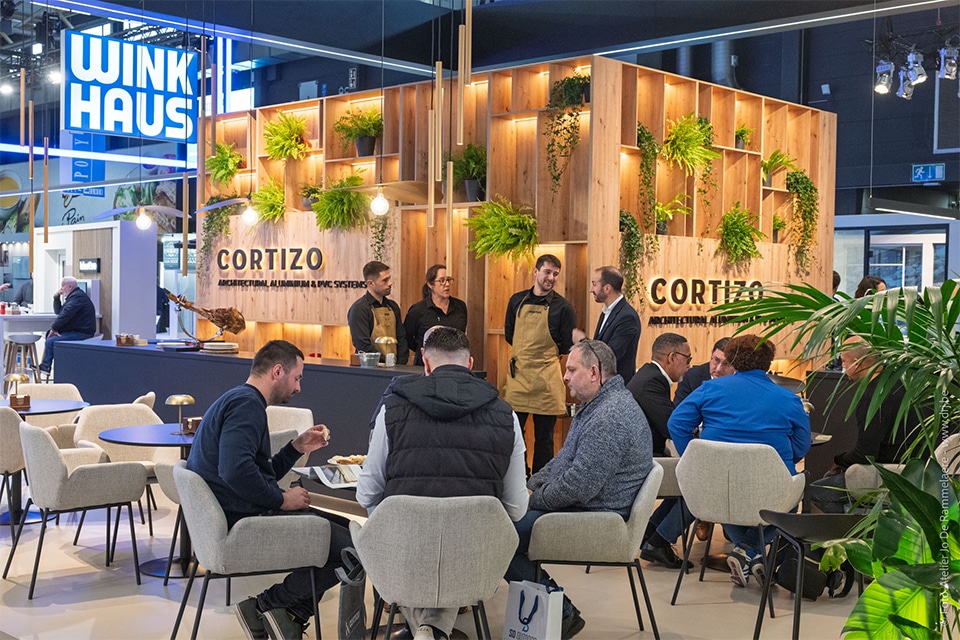
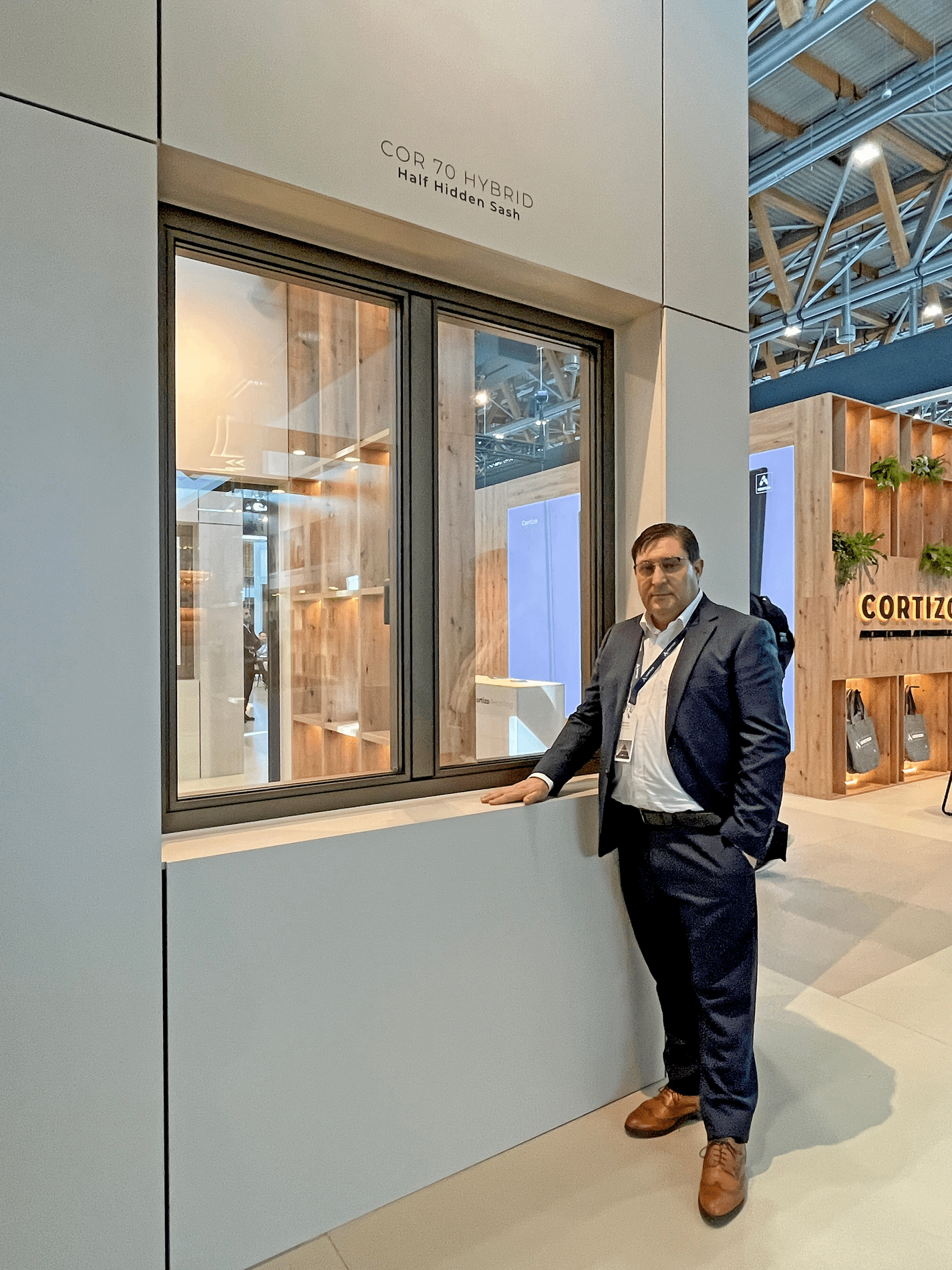
“At Fensterbau Frontale, we very deliberately highlighted our latest development: the 70 Hybrid system,” says Salvador Gonzalez, technical sales consultant Benelux at Cortizo. “This system combines a PVC core with an aluminum exterior, bringing together the best of both worlds: excellent insulation and a sleek, durable finish.” According to Gonzalez, this innovation perfectly matches current market demand. “We see that sustainability and performance are becoming more and more important. With 70 Hybrid, we are working with recycled materials while offering a competitive solution, both technically and economically.” The system is characterized by a construction depth of 70 mm, multiple chamber structures and strong thermal and acoustic performance, combined with a minimalist appearance.
Other systems also attracted considerable interest at the fair. “Our E 170 lift-and-slide door responds to the trend for slim profiles and maximum light penetration, with very good insulation values. In addition, the A 78 is an efficient solution for projects with larger volumes, thanks to fast processing and high energy performance.”
Feedback from visitors was extremely positive, according to Gonzalez. “People are looking for solutions that combine design, performance and sustainability. With our systems, we show that this combination is already feasible today.”
“At Fensterbau Frontale, the theme for us is ‘Next’: what is the next step in technology and processing?” says Marten van Dijk, Technical Coordinator at SIEGENIA. “A good example is our new aluminum hardware, the Alu XT. That is a completely new way of assembly.” According to Van Dijk, this means a clear simplification for the processor. “Where you used to work with battens that you had to slide in, we now simply insert the hardware, turn it over and click it in place. That saves time, tools and you can deal with tolerances better. You also no longer have to rework corners, which speeds up the process considerably.”
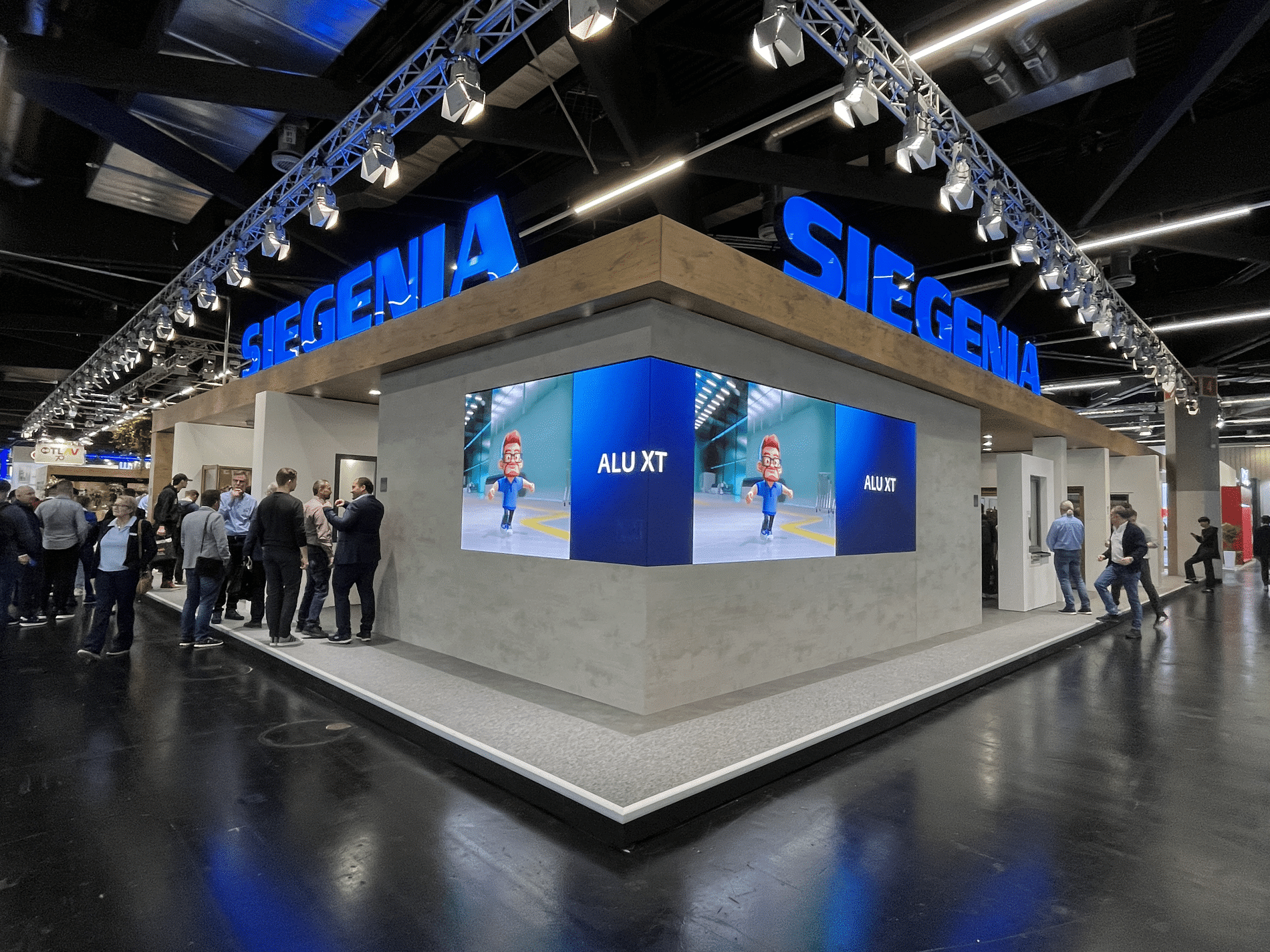
In addition to aluminum, SIEGENIA is focusing strongly on developments in plastic and wood. “With GRP sills, we are replacing traditional aluminum solutions. This not only gives technical advantages, but also a tighter appearance, especially in combination with sliding doors.” In the process, SIEGENIA is also introducing new sliding solutions. “With the EcoSlide CO, we are working with a parallel sliding system that is airtight up to 600 Pascal thanks to an all-round sealing rubber. That fully meets the Dutch requirements.” SIEGENIA is also making strides in the field of locking technology and home automation. “Our automatic locks set themselves and always ensure maximum tightness. And in our ‘house of the future’ here at Fensterbau, we show how windows and doors are fully integrated into smart systems.”
“At Fensterbau Frontale, we mainly showed how solar shading is becoming increasingly smart and integrated,” said Elias Hernalsteen, Consultant Architectural Projects at WAREMA. “Our latest development, the Climara W25, is a good example of this. This sunroof screen works with a gas spring in the side guides, which keeps the fabric perfectly tensioned, even for large areas up to 30 m².” According to him, the innovation is not only in performance, but also in use and assembly. “We designed the system so that maintenance can be done easily through the top cover. Assembly has also been greatly simplified by smart, retractable side components. That makes it a lot more efficient for installers.”
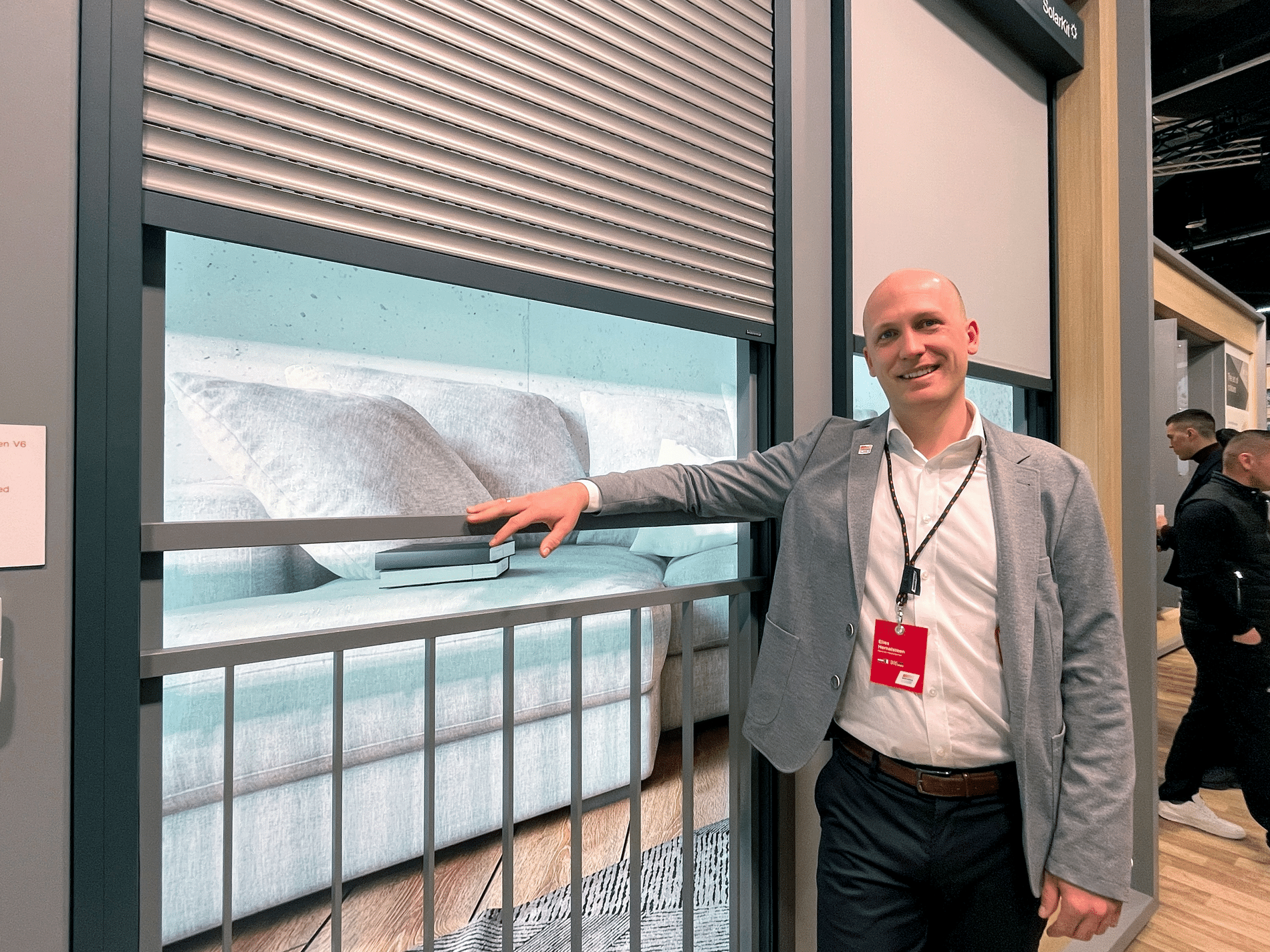
In addition, the further development of the VisioNeo Sun system drew much attention. “We combine sun protection and fall-through protection in one integrated profile. That means one system, one look and one installation process. You avoid multiple parties having to work together on one facade, which simplifies the construction process considerably.” WAREMA also introduced new solutions for curtain walls. “With our plug-and-play systems for exterior blinds and screens, assembly can be done much faster and closer to the glass. This not only ensures a tighter design, but also a more efficient installation.” The common thread according to Hernalsteen is clear: “We bring functionality, aesthetics and ease of installation together in one system; exactly what the market is asking for today.”
“Fensterbau Frontale is primarily a place for us to engage in conversation and test ideas,” says Thomas de Jong, commercial-technical consultant at Venster Techniek. “We don't just show existing solutions here, but rather developments that are still in motion.” A good example is the new flat-profile sill. “For flat profiles, we did not yet have a suitable solution, while these are standard in large parts of Europe. In the Netherlands we work with recessed profiles, but if you want to broaden the market, you have to respond to that as well. That is why we are showing a first printed variant here to show where we want to go.”
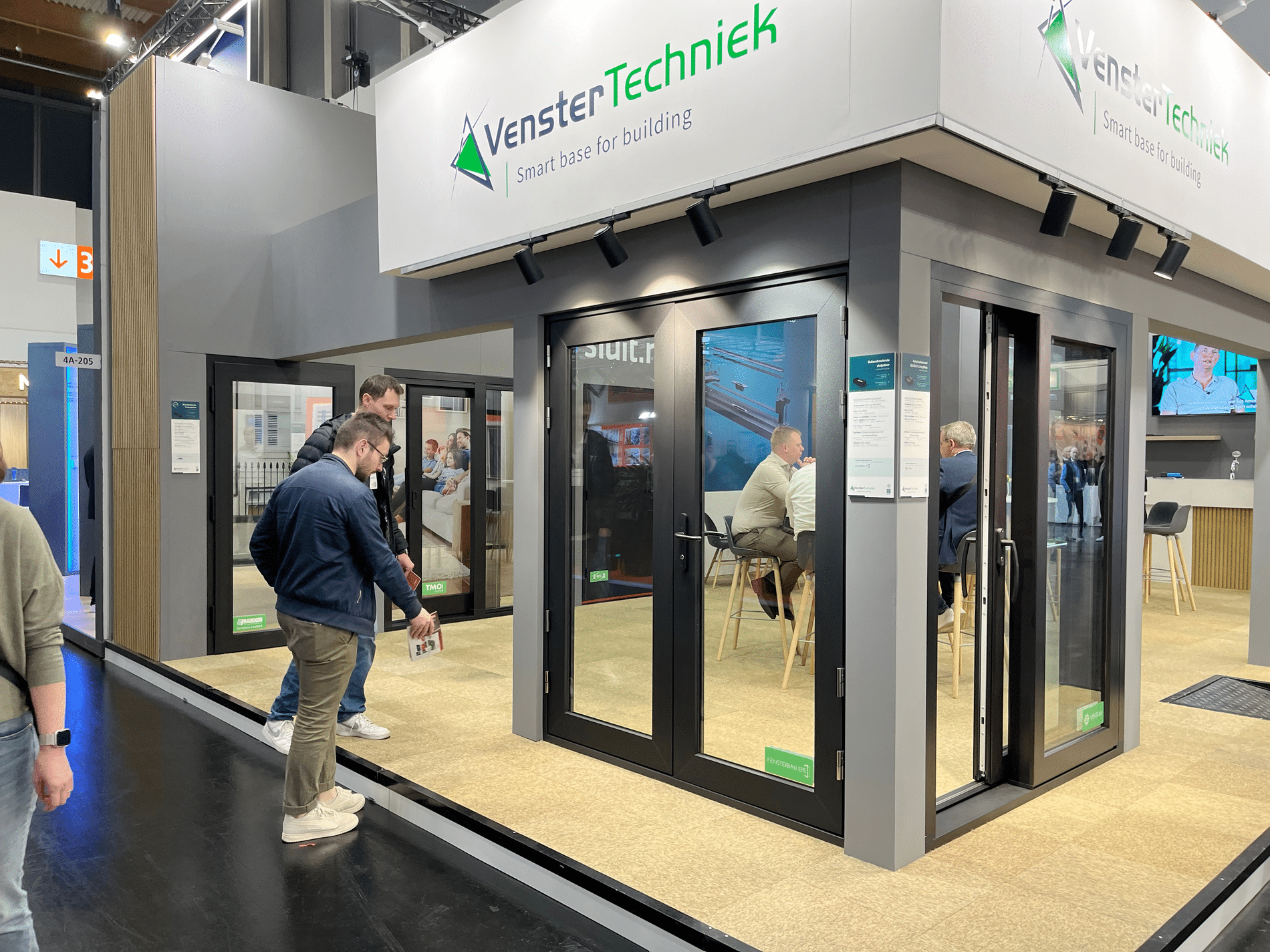
According to De Jong, the strength is in the details. “For example, we look at direct glazing and a custom glazing cap that fits the limited space of a flat profile. These are practical things that make the difference in application.” In addition, Window Technology also presents existing innovations that are being further developed. “The VTD Fire Protect lower sill is a good example of this, as is our new concealed hinge for exterior (upright) doors. Here the seal remains completely continuous, which is unique in the market. The lift-slide element SCHÜCO LivingSlide will also be on display at the trade fair, with which we are responding to the growing demand for high-quality sliding solutions.” According to De Jong, the fair underlines the importance of cooperation. “The best solutions arise in dialogue. Here we pick up input with which we can take innovations further.”
“Fensterbau Frontale confirmed for us that the digitization of the entire value chain is no longer future music, but daily reality,” says CEO Moritz Ebert of 3E Datentechnik GmbH. “Our goal is to bring together all processes of frame manufacturers - from CRM and order processing to logistics and service - in one central environment.”
According to Ebert, the 3E-LOOK ERP system is at the core of this. “From one basic platform, we build modules for estimation, material management, assembly and web solutions. In doing so, we connect all levels within a company and significantly simplify daily work.”
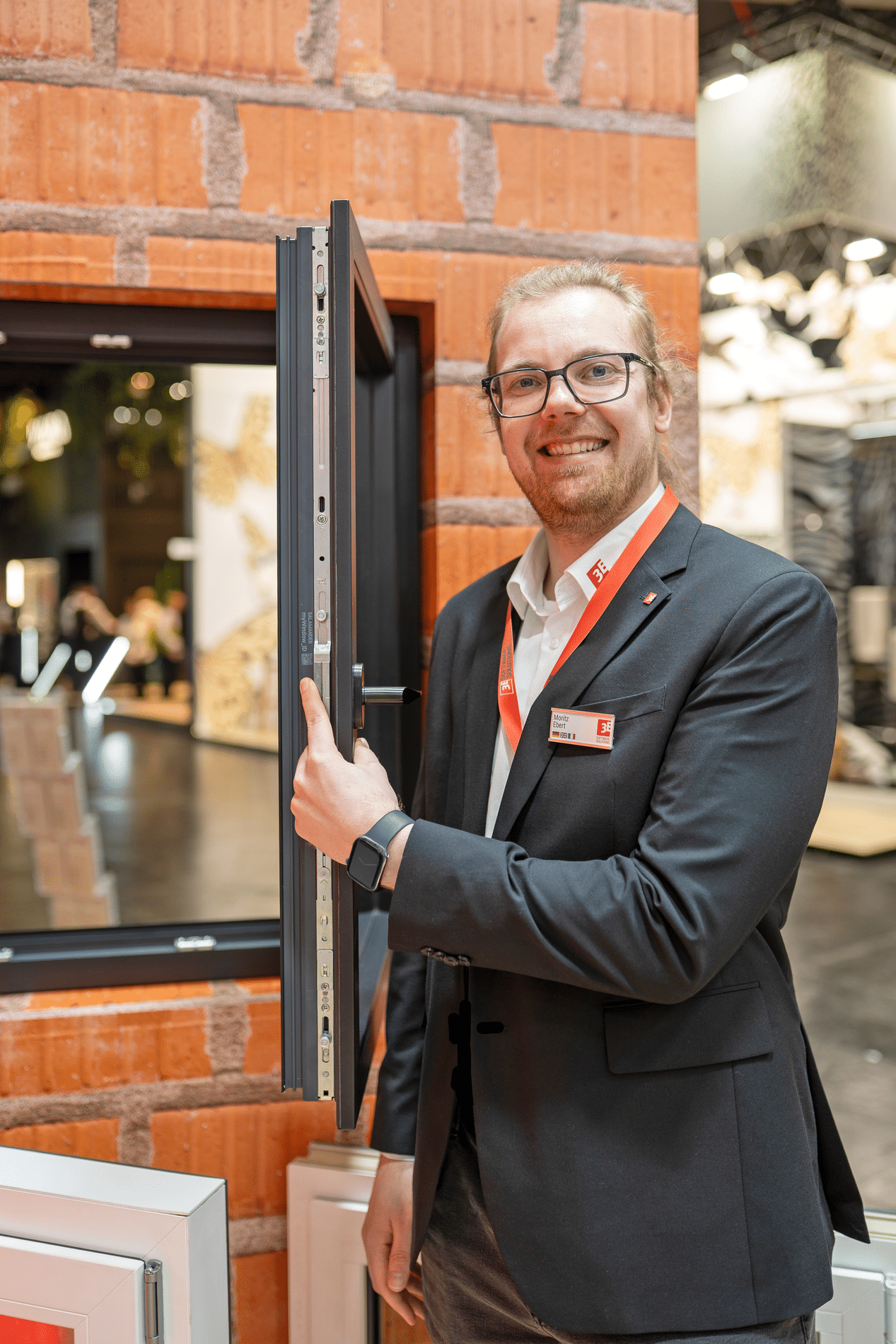
At the fair, the focus was on concrete applications. “With the latest version, we are betting heavily on end-to-end digitization. Think of a fully digital delivery note, with which deliveries are handled transparently, paperless and efficiently.” Mobile solutions also play a key role. “Our apps make it possible to record and manage processes on the construction site in real time, fully linked to the central system.”
One notable innovation is integration with chip technology. “The information in a window comes directly from our software. Through scanning, the system knows exactly which components have been used, making service and maintenance much faster and more focused.”
Reactions to Fensterbau were clear, according to Ebert. “Customers experienced directly how digitization makes window construction more efficient, better connected and future-proof.”
“With ARTEVO, we show where the future of plastic window frames is headed,” says Koen Schepens, Sales Manager Windows Solutions Benelux at REHAU Window Solutions. “ARTEVO is our newest premium window system and the successor to GENEO. It builds on our RAU-FIPRO X technology, a fiber-reinforced plastic with which we achieve performance you would normally associate with aluminum.” “Thanks to that technology, we achieve much higher stability without steel. That makes the system not only more durable and lighter, but also suitable for larger dimensions. We achieve sash heights of up to 2.30 meters without steel and even up to 2.90 meters for lift-slide systems, with insulation values up to passive house level.”
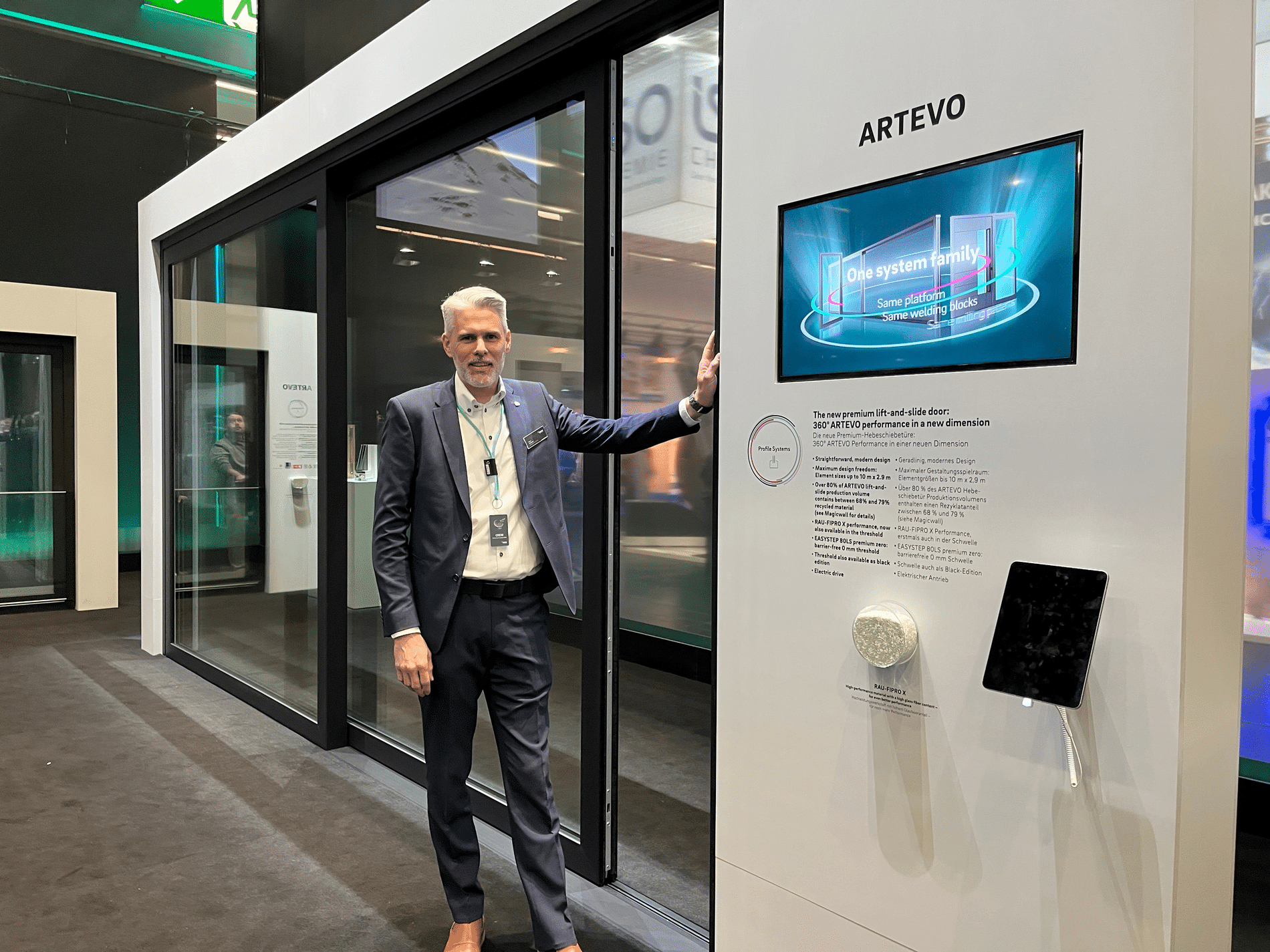
According to Schepens, ARTEVO's strength also lies in its design. “We work with tight, flush profiles and fully concealed fasteners. In addition, we integrate smart solutions, such as cable routing in the profile, making installation and maintenance easier.” Digitization reinforces that development. “With Window.ID, each window receives a digital passport via a QR or RFID tag. This gives users instant access to all information, while processors can better manage their logistics through Rack.ID.” REHAU is also making strides in terms of design. “We offer multiple color techniques, such as aluminum shells and wet painting. The next step is digital printing, where we can ‘print’ profiles. That offers new possibilities in color and appearance.”
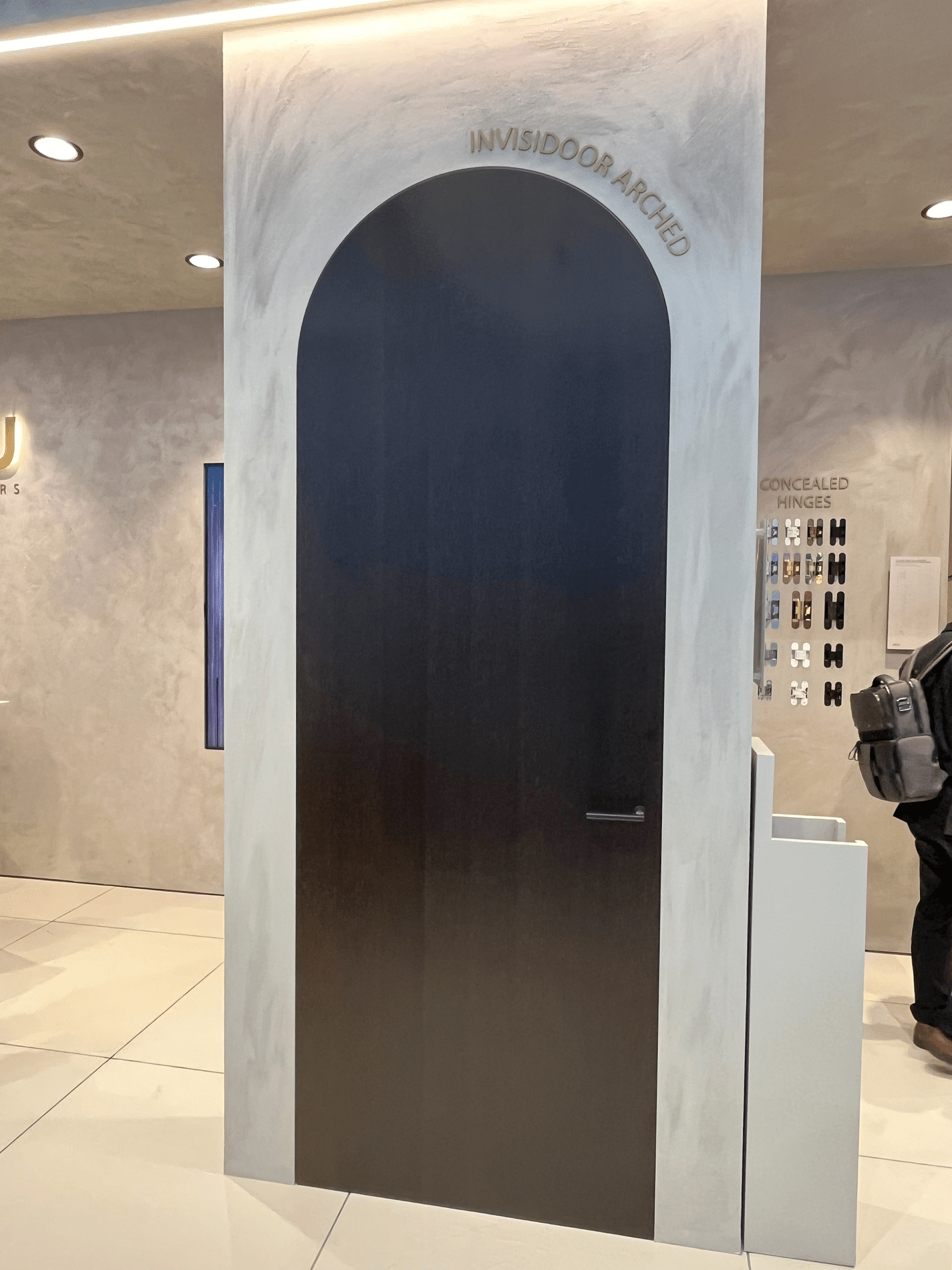
At Fensterbau Frontale, Arlu, a subsidiary in the Renson Group, showed how interior doors are increasingly merging into the overall interior concept. The focus was clearly on aesthetics, minimalism and complete integration into the wall, with technology disappearing from view as much as possible. The highlight of the stand was the Invisidoor Arched, an innovative system for arched doors with an invisible aluminum frame. With this, Arlu is responding to the growing trend toward softer, organic forms in architecture. Where straight doors have long been the norm, this system allows curved forms to be integrated seamlessly into the wall surface without visible profiles or frames. The result is a sleek, minimalist whole in which the door visually disappears.
Arlu also introduced an important innovation in the field of sliding doors. The Xperta XL Activator significantly simplifies the assembly and disassembly of in-wall sliding doors. Thanks to this extension, doors can be quickly adjusted or removed without major modifications to the wall. This not only increases ease of installation, but also offers more flexibility for maintenance and retrofitting. With these innovations, Arlu confirms its role as a specialist in high-quality, invisible interior door solutions that seamlessly combine design and functionality.
“At Fensterbau Frontale we are showing how awnings and façade finishes are becoming smarter and more user-friendly,” said Roel Berlaen, press officer for Renson. “With the new Topfix Large, we are taking a clear step forward within our range of horizontal fabric awnings.” According to Berlaen, the strength lies mainly in the combination of performance and ease of installation. “The Topfix Large is up to 35 percent lighter than its predecessor, without sacrificing wind resistance. This not only makes it easier to handle, but also faster to install. Thanks to the click system at assembly and simplified assembly, installers save time and effort.”
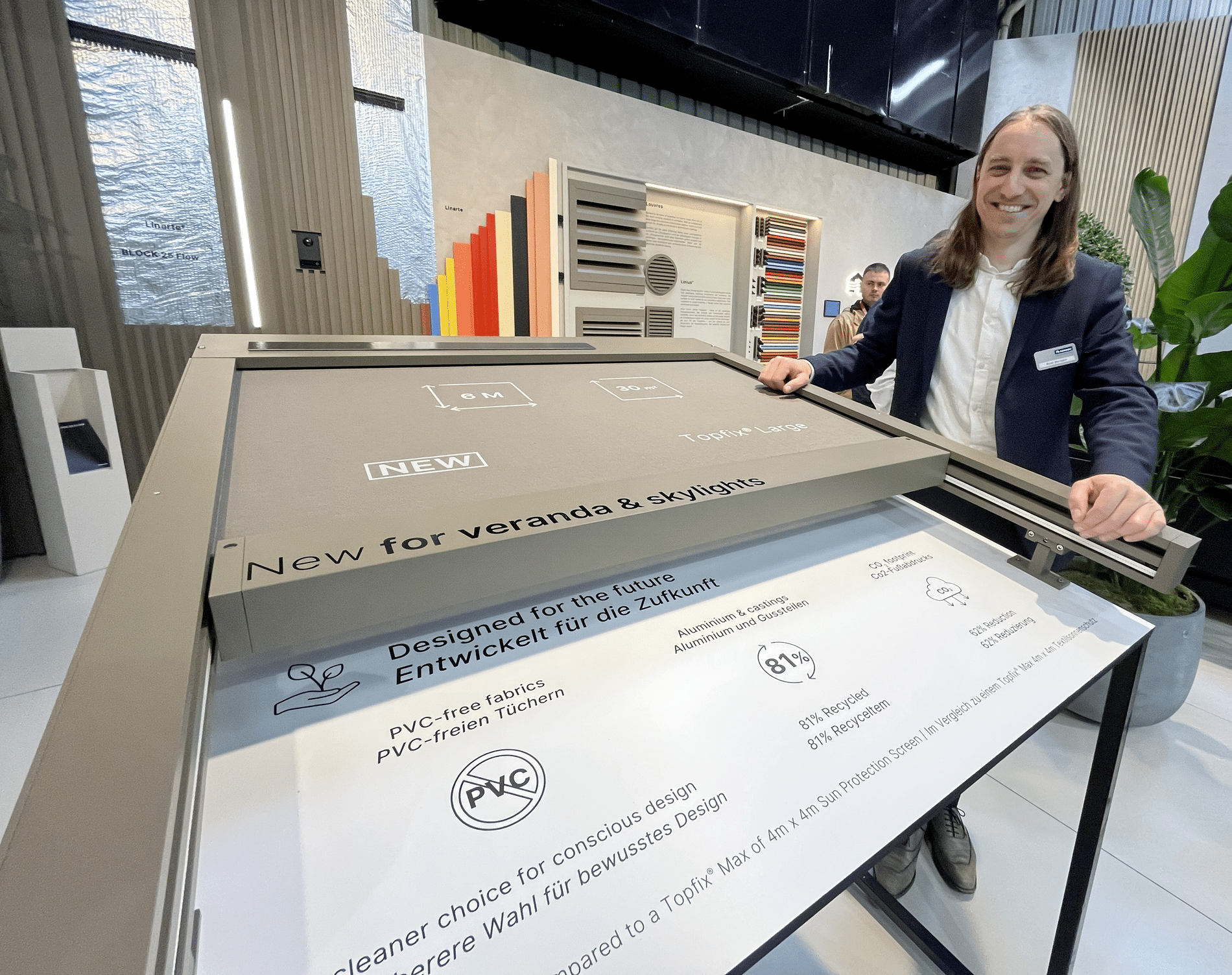
Improvements have also been made in terms of maintenance and flexibility. “We now work with one tension band instead of two, which makes the fabric easier to install and dismantle. Equipped with clips, you also no longer have to screw them into the belt pulley. That makes service and replacement a lot more efficient.” In addition, durability plays an important role. “We also offer this system in a Solar variant, which eliminates the need for cabling and makes installation even easier.” In addition to solar shading, the new facade solution also attracted attention. “With the ventilating Linarte BLOCK 25 flow profile, we combine aesthetics and functionality. With it, ventilation openings are fully integrated into the vertical facade design, without interrupting the clean lines.” Berlaen sums it up succinctly, “We develop solutions that seamlessly combine technology, design and ease of use.”
“Fensterbau Frontale clearly shows that the industry is in the midst of a digital acceleration,” said Paul Thyssen, Director of Sales Forterro Windows and Doors. “With the transition from Orgadata to Forterro, we are explicitly betting on integrated software solutions that support the entire value chain.” According to Thyssen, Quotila plays a key role in this. “With this cloud-native platform, we are specifically targeting the housing market. Quotila brings configuration, sales and production together in one digital workflow. In doing so, we are creating a true ‘digital turbo’, where processes are faster, more consistent and error-free.” That acceleration, he says, is essential for the market. “Companies want to quote faster, produce more efficiently and respond better to customer requirements. By integrating everything into a single platform, we reduce lead time and significantly increase productivity.”
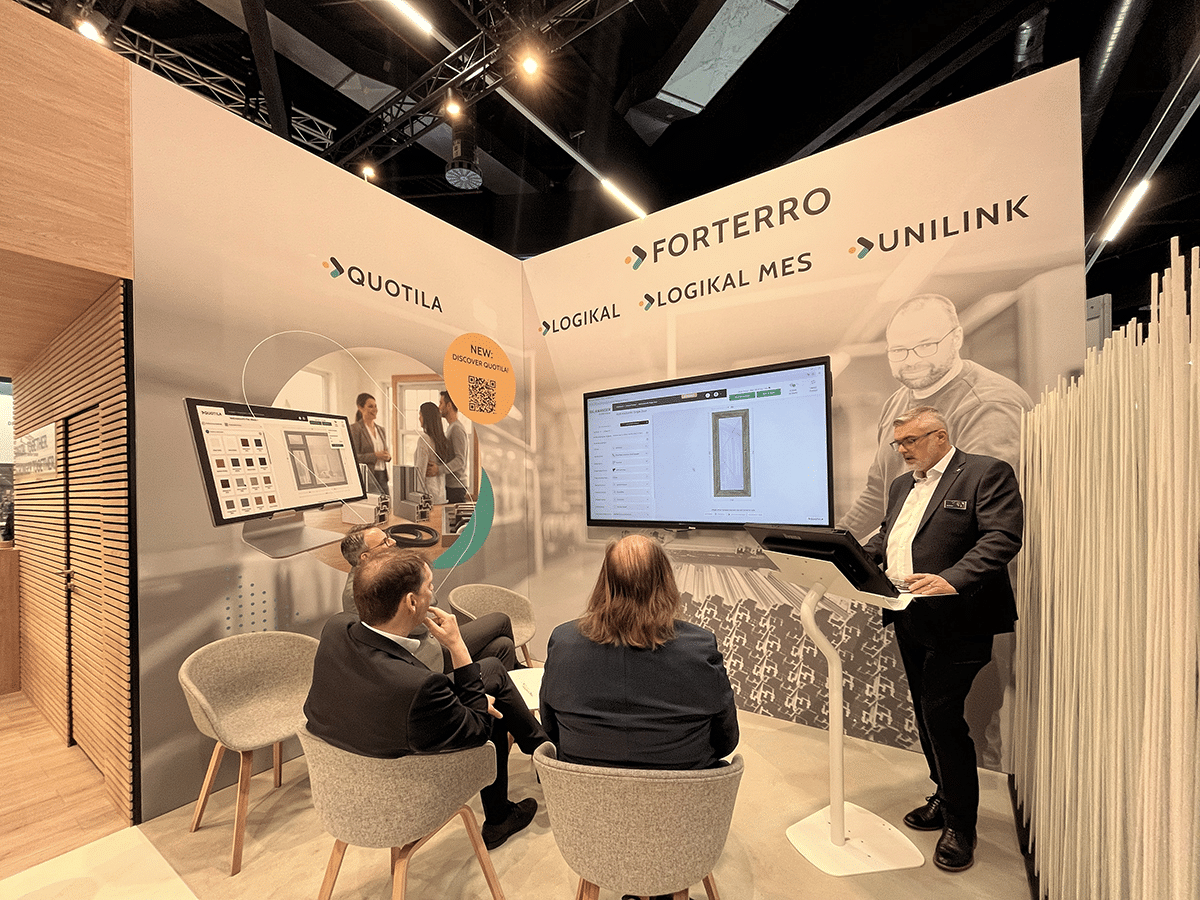
In addition to Quotila, Logikal remains an important pillar in the portfolio. “Logikal focuses more on the commercial market and aluminum applications. Together, these solutions provide a complete ecosystem for both residential and utility projects.”
The focus at the show was on further integration and ease of use. “We show how digital processes can be seamlessly integrated, from initial customer contact to production and delivery. This not only ensures efficiency, but also greater control and transparency.”
According to Thyssen, the conclusion is clear: “Digitalization is no longer a choice, but a prerequisite to remain competitive as a company.”
“Fensterbau Frontale was the moment for us to show what results when two specialists join forces,” says Jean-Paul Batenburg. “The cooperation between Deventer Profielen and Roto really is a ‘perfect match’ between sealing and hardware, and that forms the basis for solutions that demonstrably perform better in sustainable and comfortable buildings.”
According to him, it's about more than just product development. “Deventer Profielen brings high-quality sealing solutions, while Roto is strong in hardware technology. Combining that expertise creates an integrated system that works better in practice and is easier to work with.”
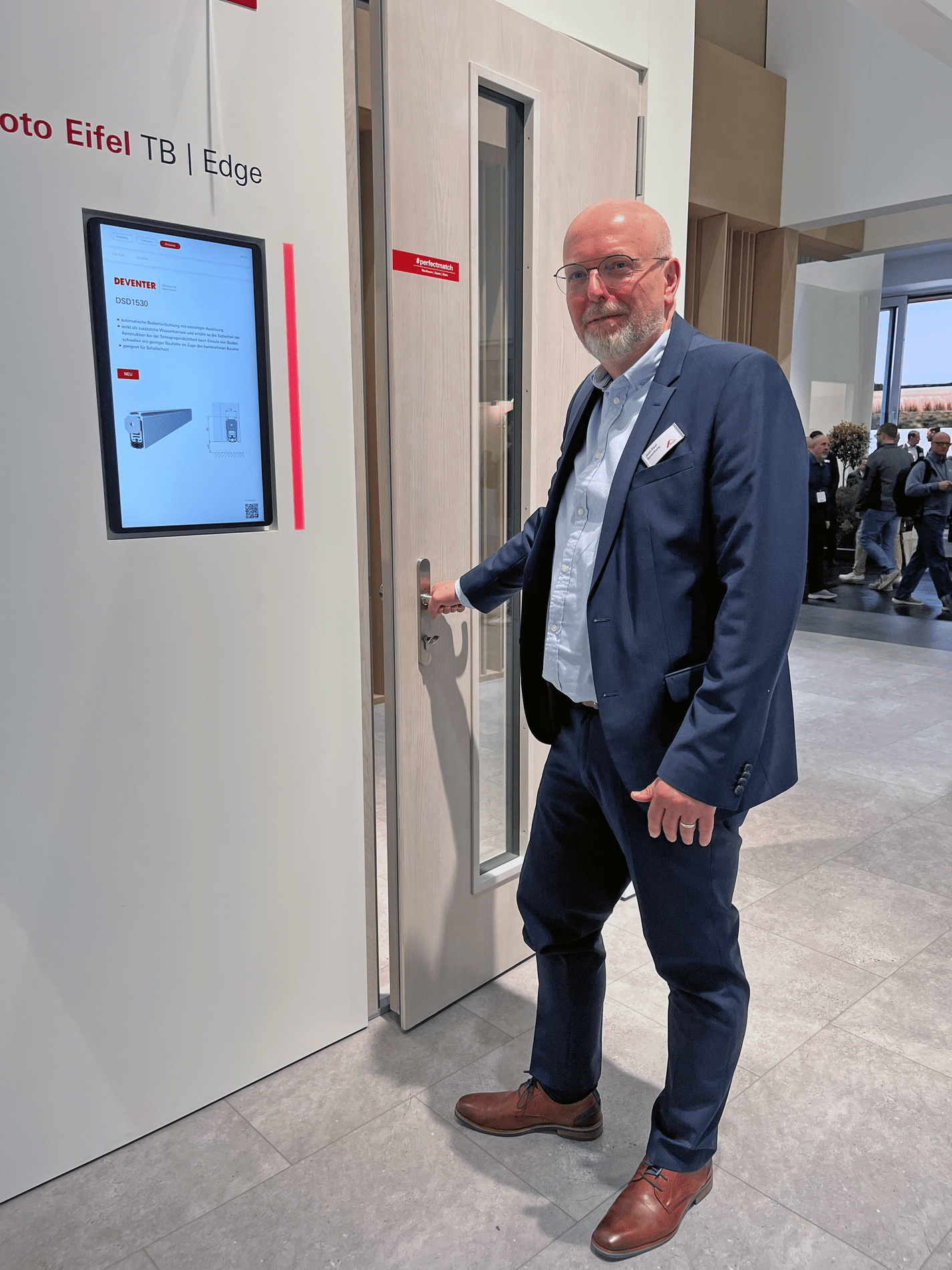
The growing demands in the construction industry make that collaboration more relevant than ever, according to Batenburg. “Buildings must be energy-efficient, comfortable and reliable. Airtightness plays a key role in this. Good airtightness prevents energy loss and contributes directly to a healthy indoor climate.”
At the fair, the interest in total solutions was particularly striking. “Visitors are no longer looking for individual components, but systems that work together seamlessly. We saw that clearly in the reactions to the combination of Deventer Profielen and Roto.”
The conclusion afterwards is clear. “Through cooperation you can accelerate innovation and set new standards. With this joint approach, we show how to structurally improve performance, comfort and sustainability.”
“At Fensterbau Frontale, we are mainly showing how Deceuninck is bringing aluminum and plastic ever closer together,” says Erwin de Voys, commercial director for the Netherlands at Deceuninck. “With systems such as Decalu (aluminum) and Elegant (plastic), we are creating one coherent story, in which design, performance and sustainability come together.” According to De Voys, the focus this year is strongly on energy performance and material use. “We are explicitly looking at U-values, LCA scores and the overall sustainability of our systems. With Elegant ThermoFibra, we are taking an important step in this regard. This profile, reinforced with fiberglass instead of steel, is significantly lighter while offering excellent insulation values.”
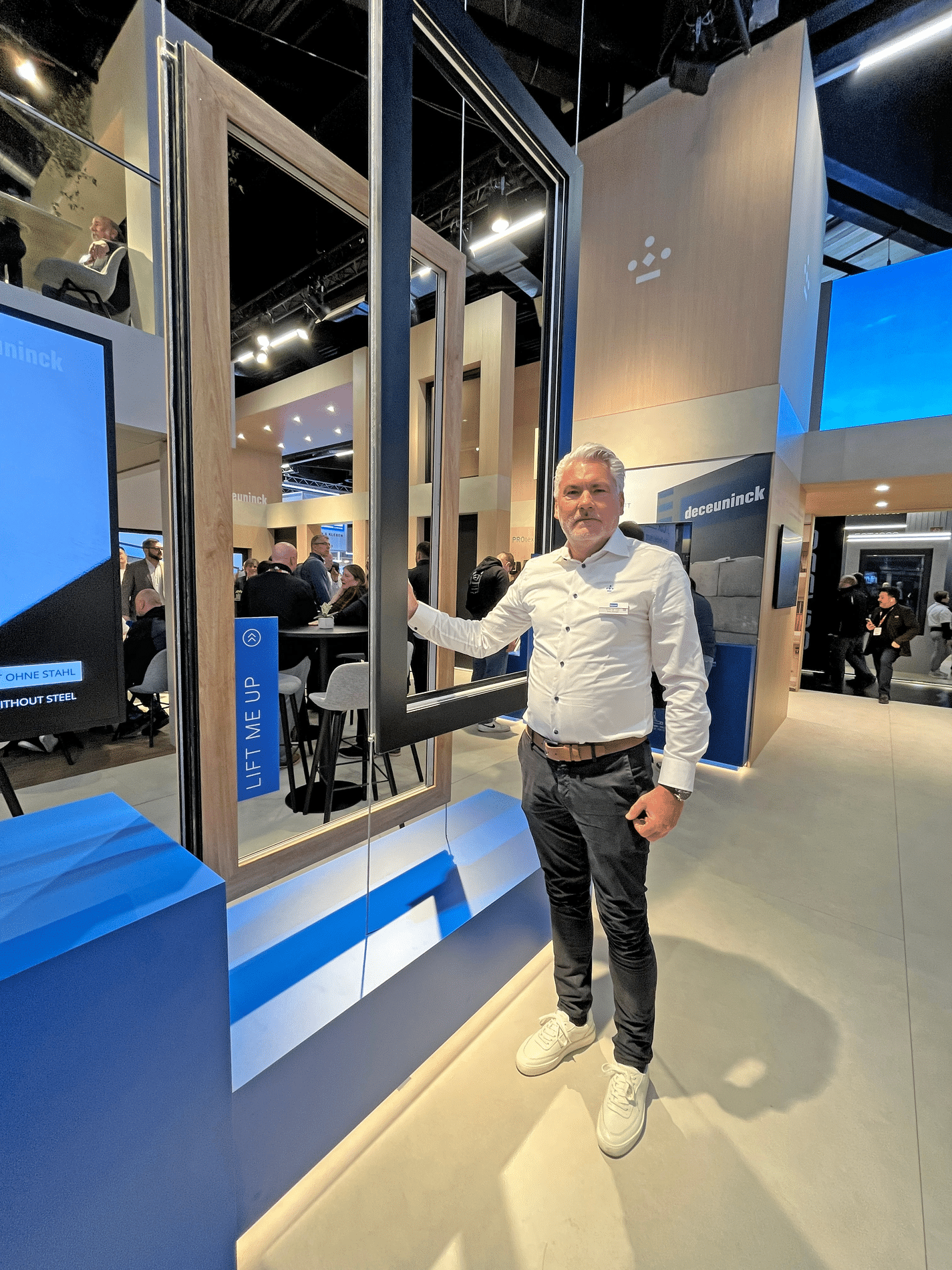
That weight reduction translates directly to practical application. “Because the system is lighter, the hardware is less stressed and assembly is easier. Hanging doors and installing frames is faster and more efficient, which is a big advantage for our customers.” In addition, circularity plays an increasing role within the portfolio. “With our Phoenix range, we are introducing profiles that consist of 100 percent recycled plastic. This means that materials from end-of-life products are completely reused.” Deceuninck sees the future of the industry in this. “We combine innovative technology with circular thinking. That fits perfectly with our motto ‘Solutions that matter’: solutions that really make a difference, today and tomorrow.”
“Fensterbau Frontale is without doubt the most important trade fair in the world for our sector,” states Klaes marketing manager Torsten Schrader. “Here the whole world really comes together, from China to Canada. For us as a software supplier, it's not just about presenting, but above all about meeting, making contacts and strengthening relationships.” According to Schrader, two themes were central this year: digitization and artificial intelligence. “Digitalization has been keeping the industry busy for several years and will continue to do so. Companies are looking more and more critically at their processes: what can be done faster, what can be done more efficiently, where can profits be made?” On top of that comes the rise of AI, which he says is accelerating everything. “We are still at the very beginning. Nobody knows where this development is going, because the growth is so exponential. That is precisely why it is crucial to get in now.”
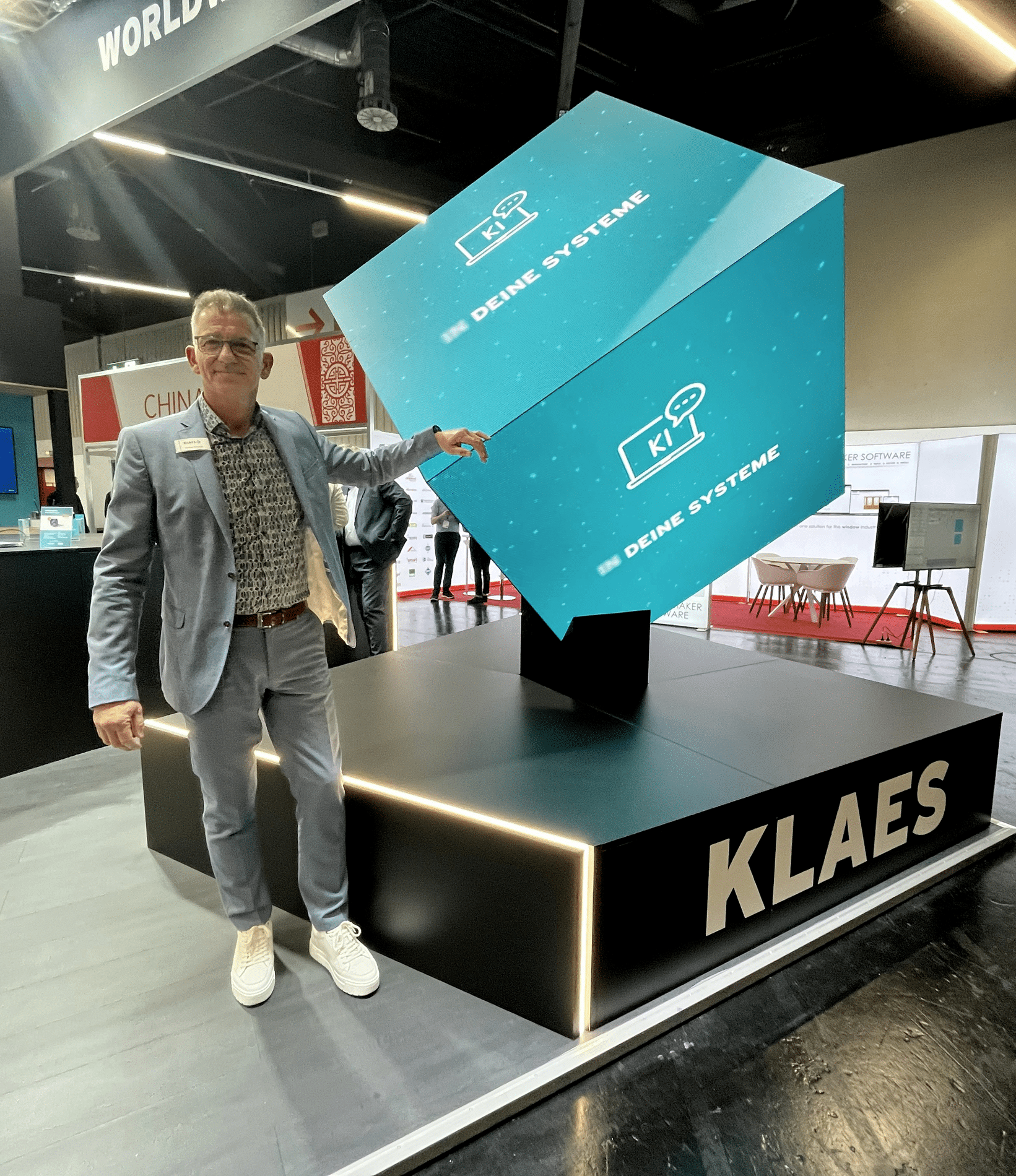
Klaes is capitalizing on this with its own AI Hub. “This works together with leading Large Language Models such as ChatGPT, Gemini and Perplexity,” Schrader explains. “In addition, users can fall back on all available information within the Klaes software as well as the Microsoft environment. And we are not standing still: still this year we will expand this further with data from the ELO document management system and the CRM system.” This broad integration, he says, makes all the difference. “Users have instant access to documents, customer data and business information, and at an unprecedented speed. AI thus becomes not a stand-alone tool, but an integral part of the daily work process.” The message toward the market is clear. “Companies that ignore AI risk being left behind. Those who step in now will save time, increase comfort and ultimately can significantly reduce costs.”
“At Fensterbau Frontale, we want to clearly show that the Voilàp Group is definitely also a serious player in PVC machine tools,” says Bas Ladestein, Regional Director Voilap Benelux. “With the addition of Stürtz to our group, we have a particularly complete and powerful portfolio.” According to Ladestein, the focus at the fair was deliberately on PVC solutions. “We present our brands Someco and Stürtz prominently here, including advanced CNC machining centers and welding solutions for PVC profiles. At the same time, we also show the breadth of our group on large screens, with technologies from emmegi, tekna and elumatec, among others.” Voilàp's strategy revolves around pooling knowledge and capacity. “By combining forces worldwide, we can offer customers complete solutions, from machining and assembly to automation. This is reflected in the machines we show here, such as fully integrated lines for sawing, milling and welding of window and door profiles.”
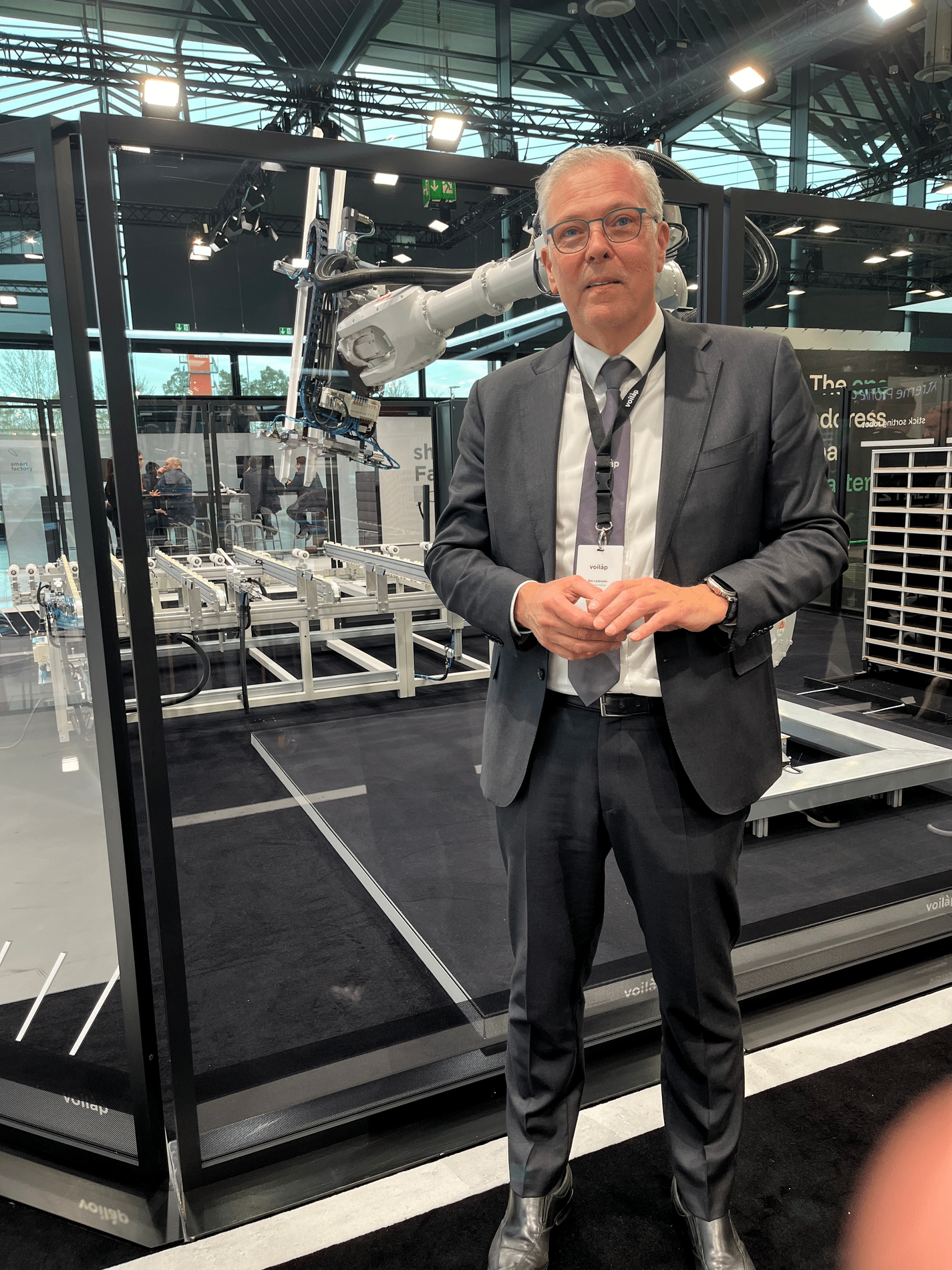
An important development, he says, is the emergence of hybrid applications. “Whereas demand used to come mainly from the PVC market, we are now seeing increasing interest from the aluminum sector. This means that industrial production and automation are becoming increasingly important, including for hybrid systems.”
Voilàp's message is clear. “We are looking ahead and responding to that evolution. Our machines are ready for both PVC and hybrid solutions and support manufacturers in efficient, future-proof production.”
“Fensterbau Frontale was all about ‘Fit for the Future’ for us,” says Country Manager Remco van Overdijk of Kömmerling Netherlands. “We show how we help our partners with solutions that make production easier, reduce material use and at the same time provide economic benefits.” Friedhelm van den Berg, Sales Manager Kömmerling Germany, points to the strength of the new hybrid concept. “What is special about a hybrid system is that it looks like an aluminum window frame from the outside, while you benefit from the advantages of an industrial plastic solution. That makes it possible to produce a more favorable aluminum window frame, exactly what the market demands.”
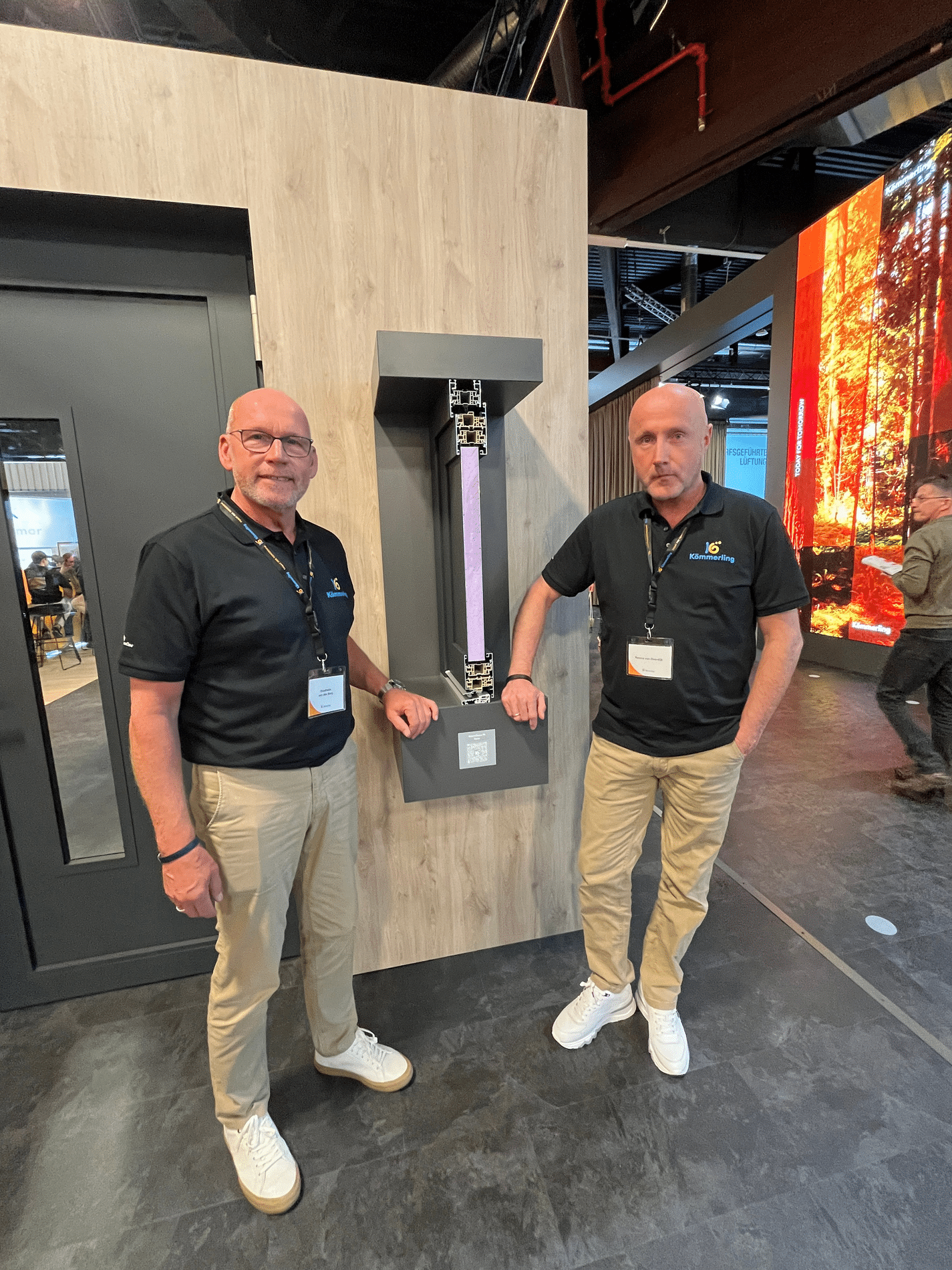
Central to that development is the new WarmCore system. “We combine a PVC core with an aluminum outer shell,” said Van den Berg. “That construction provides an optimal balance between insulation, stability and appearance.” According to Van Overdijk, the strength also lies in its wide applicability: “WarmCore can in principle be used throughout Europe. For the Netherlands, we are now working with one of our partners, Smits Kozijnen, on a variant with stopper, so that mounting on a structural frame becomes possible.” According to both, the reactions at the fair confirm the direction. “Visitors are looking for concrete solutions that bring sustainability and efficiency together,” says Van Overdijk. “With WarmCore and our ‘Fit for the Future’ program, we show how innovation contributes directly to better performance, sustainable products and a stronger competitive position.”
“At Fensterbau Frontale, we clearly focused on innovations that directly address the Benelux market,” says Marco Pels, Managing Director FUHR Benelux. “Within our PVC program, we are again showing the 835, but now expanded with a new curved door solution for double doors in the residential sector.” According to Pels, FUHR is thereby responding to concrete market demands. “For private homes, there is an increasing need for reliable and user-friendly solutions for double doors. With our new 846 bellows solution for PVC doors, we are taking an important step in this direction. What we are showing here is still a prototype, which we will continue to optimize in the coming period.”
Steps are also being made within other material applications. “We are presenting new locking parts for wood, specifically for Type 10 within the 835 series. These are also suitable for obtuse wood doors, offering additional flexibility for the processor.” In addition, the Smart Access program is being further expanded. “We have now also integrated a finger scan, making access control even easier and more secure.” The common thread according to Pels is clear. “We develop solutions that respond to comfort, security and easy handling. In doing so, we offer systems that perfectly match the daily practice of our customers in the Benelux.”
“Fensterbau Frontale is the place for us to show how we respond to both international trends and local market needs,” says Bas van den Eerenbeemt, Head of Service & Development at GEALAN. “Under the theme ‘Designed for You,’ we show solutions that are not only technically right, but also match design developments and country-specific requirements.” According to Van den Eerenbeemt, GEALAN's strength lies in that combination. “Here we present our complete portfolio for Europe, but always translate that to country-specific applications. In the Netherlands, for example, you see a strong demand for solutions such as the Hafen-City-Fenster, which responds to acoustic requirements for deaf facades. After years of preparation, we now notice that the market is really loosening up, with large projects in which this solution is applied.”
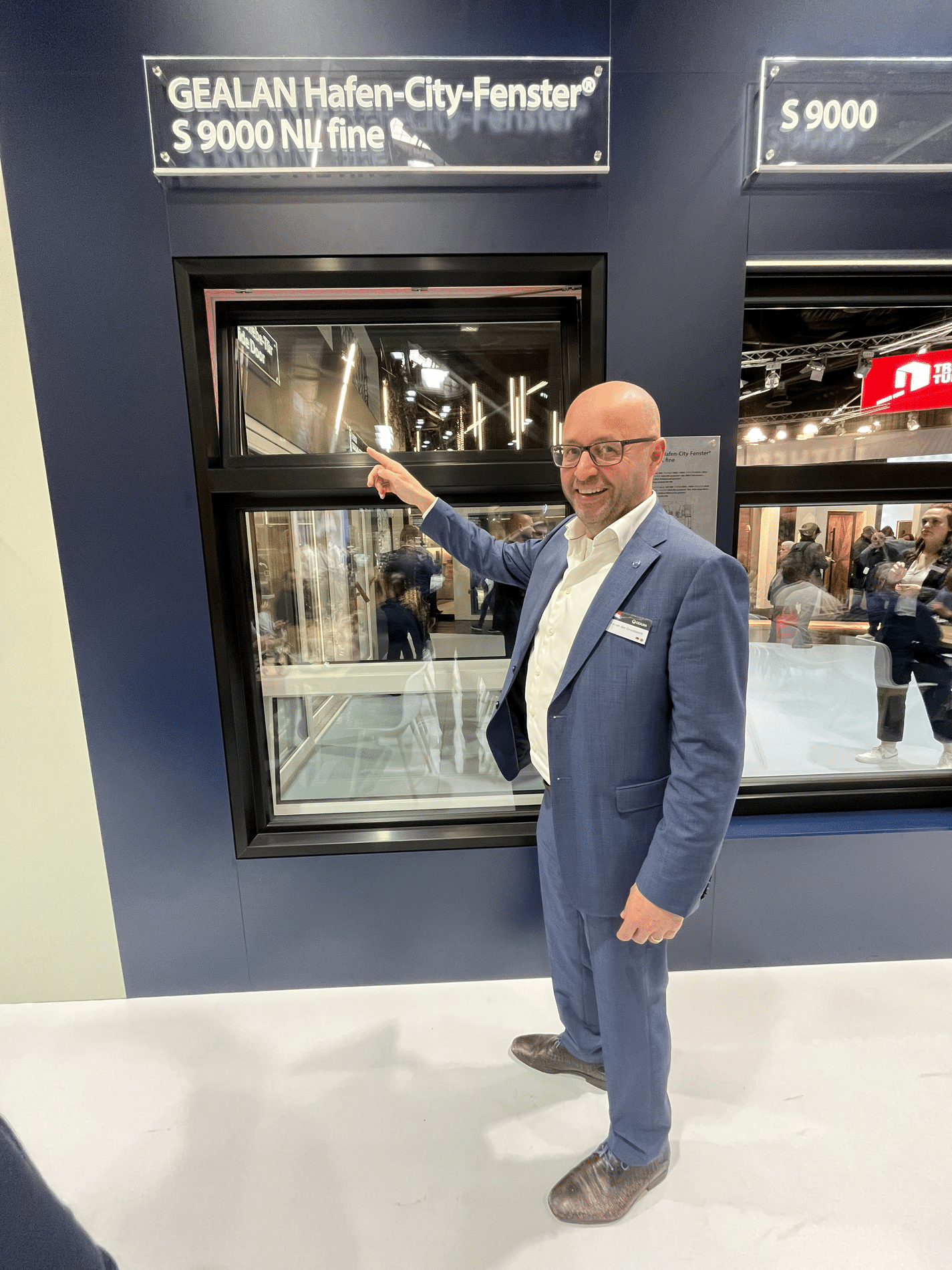
GEALAN also sees clear shifts in color and finishes. “Architecture is moving toward warm, natural tones such as bronze, champagne and copper-like colors. With new finishes like Pearl Orange, we are responding directly to this.” He also emphasizes the importance of collaboration. “We are not looking for customers who just want a supplier, but partners with whom we develop solutions together. This is also reflected in our digital tools and system solutions, which bring design and execution closer together. In short: by combining design, technology and market knowledge, we really make a difference.”
“Fensterbau Frontale confirms for us that the demand for automation and smart production technology is only increasing,” said Niels and Cees van Essen of Kruba. “We see that customers are looking more and more emphatically for solutions that make their production more efficient and consistent.”
According to them, developments at partners such as Urban and Thorwesten particularly stood out. “At Urban, we see an interesting innovation in the corner polish, where automatic turn-tilt corner hinges are mounted. The system pre-drills, removes the film and screws the corner hinge directly onto the frame. That kind of integrated solution saves an enormous amount of time and less manual handling.”
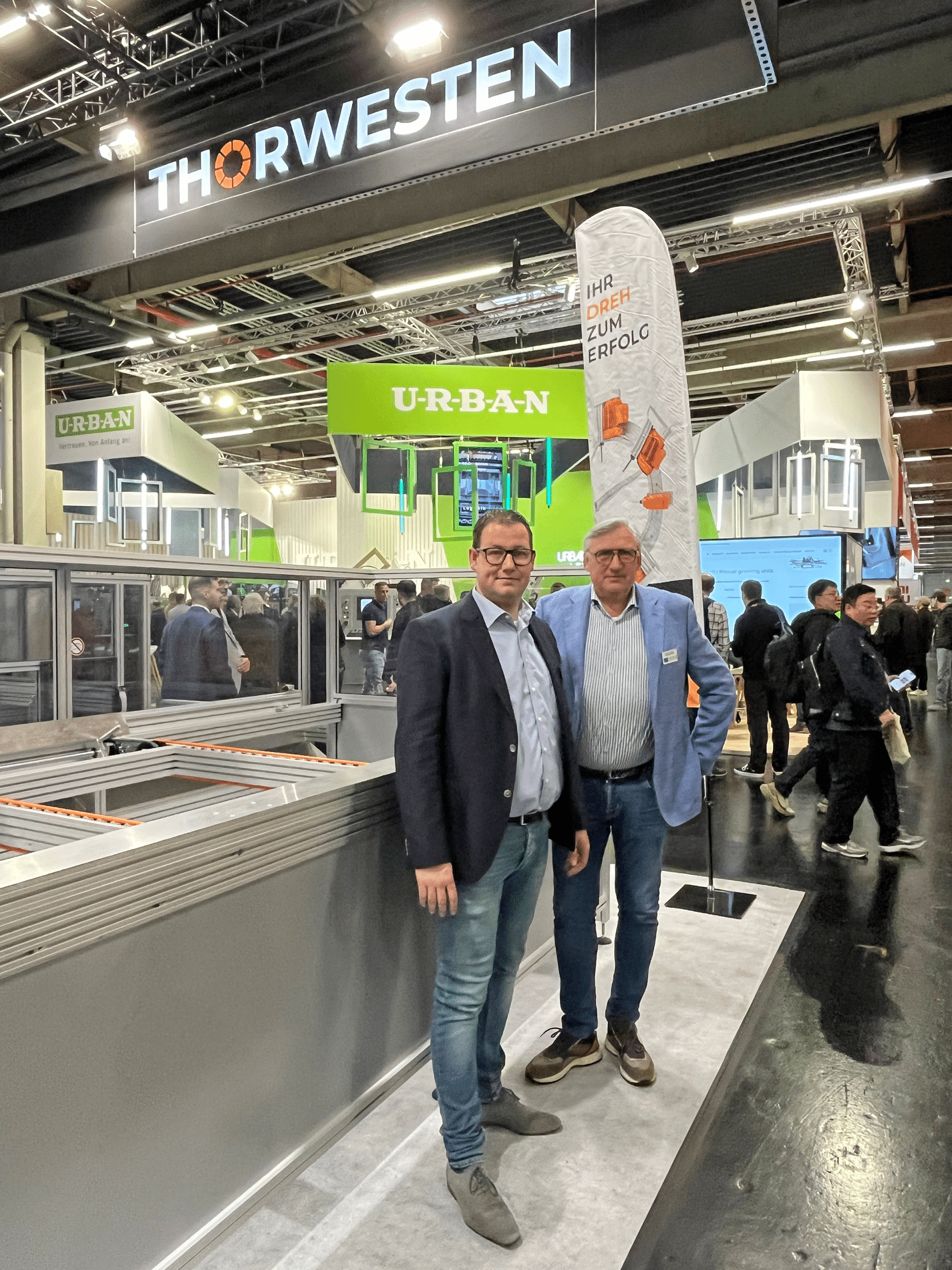
Progress at Thorwesten is also seen as important. “The new steel sawing center responds to the growing need for automation of steel reinforcement cutting. What makes it special is that the machine itself adjusts the cutting pressure servo-controlled based on the resistance of the saw blade. This prevents errors and increases reliability.”
Kruba sees a clear trend for the industry in this. “The combination of automation, process reliability and integration of operations is becoming increasingly important. Customers want complete solutions that bring together multiple steps in one process. This fair therefore shows that technological innovation contributes directly to a more efficient and future-proof production environment.”
“At Fensterbau Frontale we have very deliberately brought together four worlds with our approximately 600 square meter booth,” says Dominik Mathes, Head of Product Management at Aluplast. “In the red zone we are showing our door systems in PVC and aluminum, while in the petrol green zone we are presenting our sliding solutions, from classic systems to SmartSlide and lift-slide doors.” According to Mathes, however, the main focus is on the connection between those solutions. “In the gray zone we show aluminum and hybrid systems, but the heart of our presentation is the beige zone with our Neo platform. That is our PVC base, in which we can realize a huge variety of design options and combinations.”
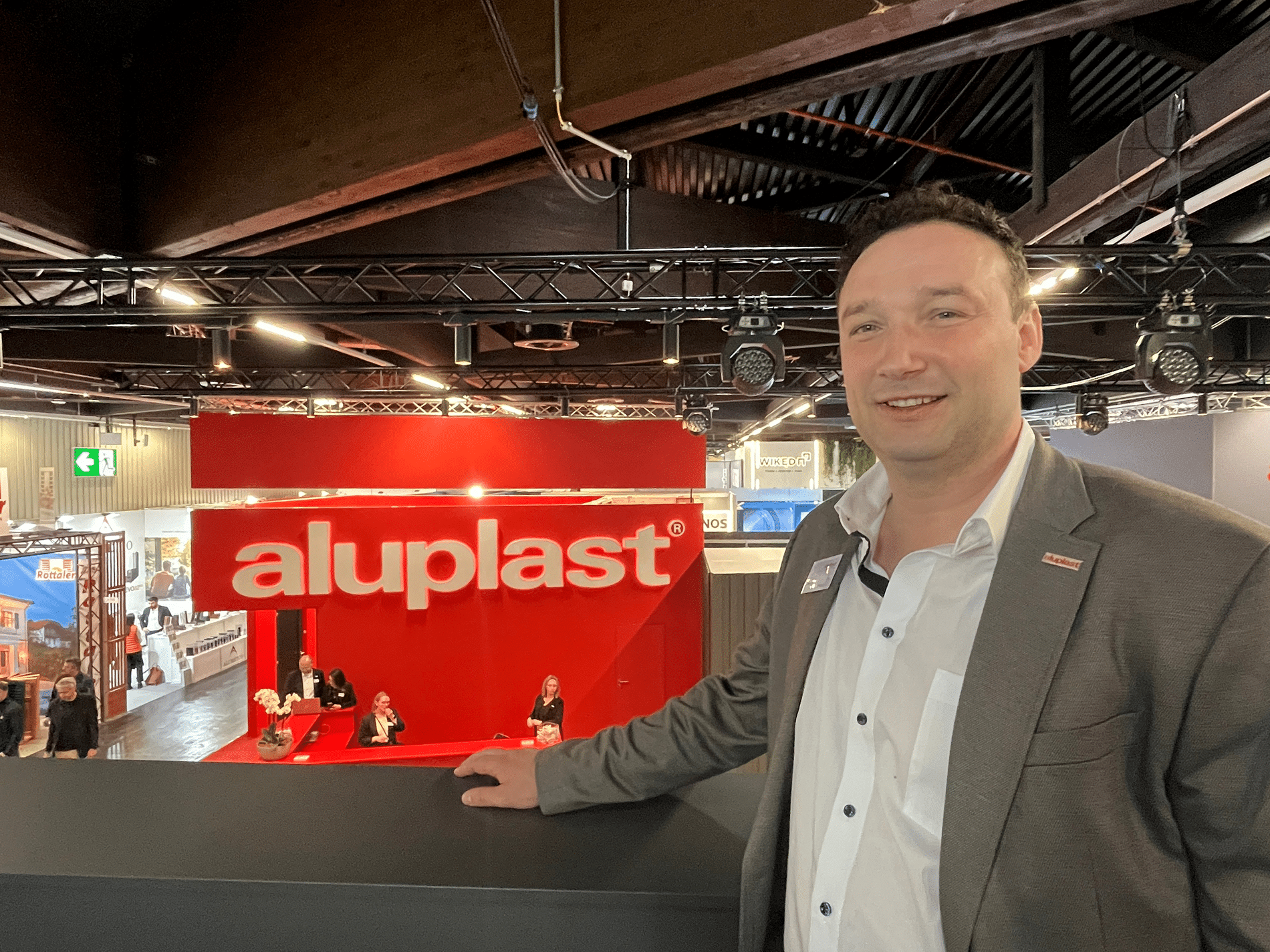
That Neo platform fits seamlessly with Aluplast's broader strategy. “PVC and aluminum function technically independently, but together they create a harmonious facade appearance. This is exactly what the market demands: flexibility in material selection without compromising on aesthetics or performance.” Interest at the fair confirmed that course, according to Mathes. “Architecture increasingly demands large glass surfaces, slim profiles and uniform appearance. With our systems, we can achieve those ‘limitless openings’ while ensuring energy efficiency.” Aluplast's message is clear. “Our slogan ‘neo.one75.next’ emphasizes that we are developing platforms that connect both worlds and that we are ready for the next generation of window and door solutions.”