Platform on window, door, frame technology, hardware, roof and facade technology, security
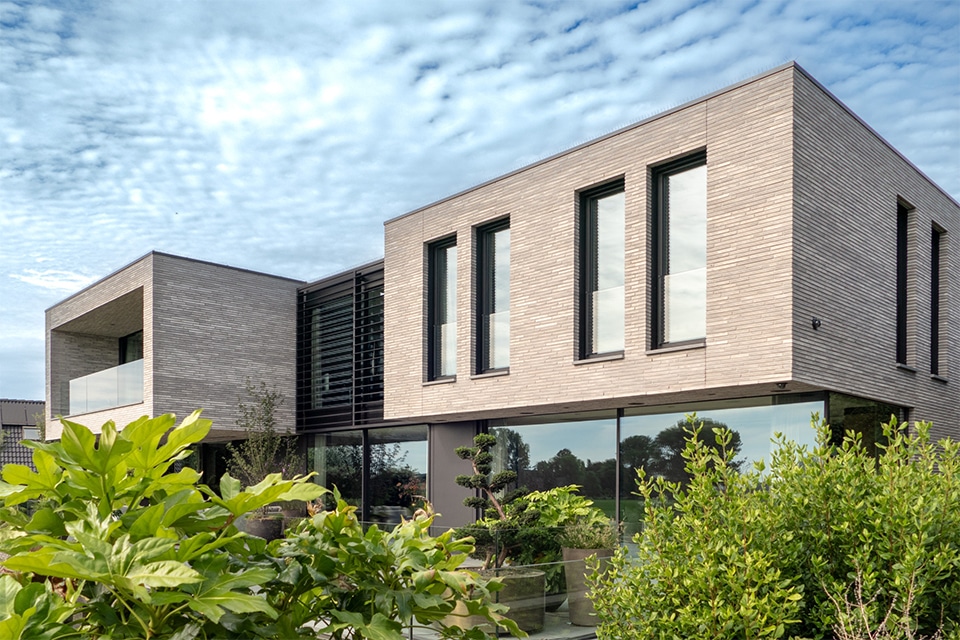
(Tilt-and-turn) windows installed on a partition separating a floor must, according to the Building and Living Environment Decree (Bbl), have a fixed partition. This is required if the adjacent floor, ground, or water is more than one meter lower, in order to prevent a fall from the window. At the location of a window, this partition must be at least 0.85 meters high, measured from the floor and taking into account any possible means of stepping up. This requirement can be met by installing a intermediate rail at the correct height or by installing a ‘French balcony.’.
Instead of a fixed partition, the window’s tilt function is blocked or a window with only a casement function is chosen as a so-called ‘equivalent’ solution. However, these alternatives do not guarantee safety throughout the building’s entire lifespan and can therefore lead to life-threatening situations. The facade industry believes that a high-quality facade must be safe throughout a building’s entire lifecycle. In a position paper, the joint facade industry organizations call for prioritizing safety in facade design and, therefore, always opting for optimal fall protection in these situations: a fixed barrier.
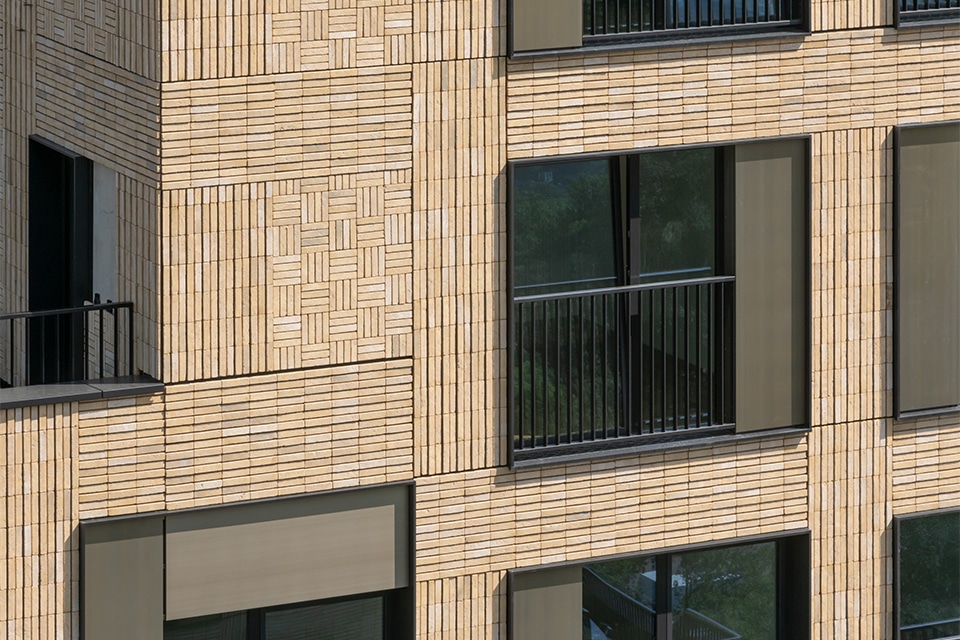
In practice, pivot-and-tilt windows are used as floor partitions in designs where it is required to lock the window in the tilt position so that only the tilt function operates. Behind these windows, there is no fixed fall protection, such as a French balcony. These locking mechanisms have not been tested for tamper resistance or durability and can often be disengaged by the user. This can lead to life-threatening situations, especially when you consider that these solutions are also used in high-rise residential buildings.
Article 4.20(1) of the Bbl requires a fixed partition for a floor that is more than one meter higher than an adjacent floor, ground level, or body of water. This therefore concerns ‘equivalent’ solutions for a fixed partition. Whether something is equivalent according to the letter of the law is open to debate. However, safety is at stake here, and a high-quality facade must be safe. The VMRG has initiated discussions on this matter with the trade associations for plastic and wooden windows and doors (VKG and NBVT) and the trade association for hardware and locks (VHS).
The joint conclusion of the industry associations is very clear: locking the tilt function of a tilt-and-turn window as a fall-through protection measure is not safe. Locking mechanisms can almost always be tampered with. Furthermore, during maintenance work, the window sash must be fully accessible from all sides. This means that the pivot lock must be removed. There is no way to ensure that it will be reinstalled (correctly). The safety of the facade is guaranteed by clear guidelines for facade elements.
Products are extensively tested for this, and quality controls are used to verify compliance. It is not possible to test or verify a swivel lock, as there are no guidelines or regulations governing this type of locking mechanism. For French balconies, there are requirements regarding fall protection. They must be able to withstand a certain amount of force if someone falls against them.
In fact, this locking mechanism assumes that the sash, along with its hinges and latches, also has the strength to absorb the impact of a fall. However, this has never been tested, as there is no test for it. Even windows designed solely for the fall-arrest function cannot be safely used as floor barriers without a fixed barrier. Here, too, it must be possible to perform maintenance around the perimeter, and there are no fall-through safety tests for this either. Therefore, for movable windows, safety cannot be guaranteed when used as a floor partition without a fixed fall protection barrier.
The facade industry therefore believes that fall protection—in the form of a lock on the tilt function of a tilt-and-turn window or the use of a window with only a tilt function without a fixed fall protection barrier—should no longer be used. This is because these solutions do not provide the same level of safety as a fixed partition. In a position paper, the joint facade industry organizations have clearly outlined this position with supporting arguments. Fall protection must be guaranteed throughout the entire life cycle of a building. This is not possible with movable windows without the addition of a fixed partition, such as a French balcony.
The facade industry therefore calls on clients, designers, regulatory authorities, and quality assurance bodies to strictly adhere to the law when it comes to using a (pivot) casement window as a floor partition and, consequently, to opt for a fixed partition, such as a French balcony with railings or a glass panel, or by installing a window with a mullion at the correct fall-through-proof height. The safety of a building’s occupants must always be the top priority.
Neem dan rechtstreeks contact op met VMRG.
 Contact opnemen
The VMRG is an association of facade builders that, through cooperation with its partners in the industry, strives to achieve optimal comfort for the end user. Through continuous product and process improvement, innovation, training and service, the long-term value of buildings is guaranteed. CORE VALUES The VMRG has four main core values: 1. MANAGEMENT OF THE VMRG LABEL As a [...]
Bekijk Bedrijfsprofiel