Platform on window, door, frame technology, hardware, roof and facade technology, security
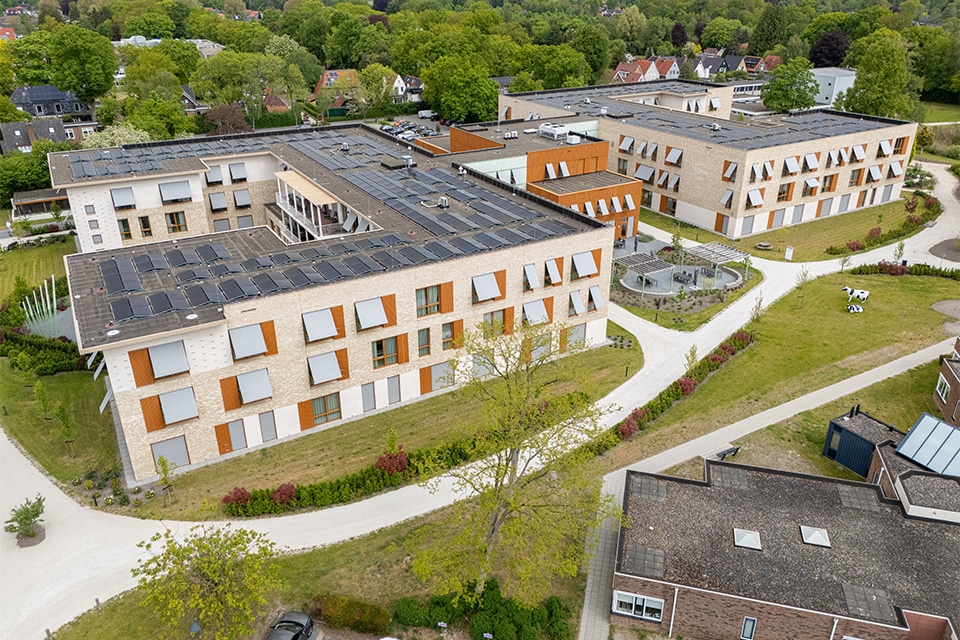
As part of the Green Deal for Sustainable Healthcare, the healthcare sector is working to make its real estate more sustainable. Reducing CO2 emissions and minimizing the use of raw materials are listed as key construction measures in this initiative. At the Anna Schotanus residential care center in Heerenveen, this ambition was realized, among other things, through the use of removable wooden exterior window frames made from plantation wood and interior window frames made from merbau reclaimed from demolition sites.
At the Anna Schotanus residential care center in Heerenveen, 144 residents receive various types of specialized and intensive care, treatment, and support. This requires a modern building—a pleasant living environment that prioritizes comfort, well-being, and innovation. On the site of the old care complex from the 1970s, a facility building and two residential buildings—designed by Architecten VOORMORGEN of Enschede and constructed by ADS Groep Bouw of Goor—were completed on Marktweg in June 2025, commissioned by Alliade. These are interconnected via a corridor. In addition to a park-like setting, the twelve residential groups feature shared living rooms, communal spaces, and a restaurant. The new building is designed to be energy-neutral (ENG).
The healthcare sector is working on the Green Deal for Sustainable Healthcare, which includes making real estate more sustainable, reducing CO2 emissions, and cutting back on the use of primary raw materials. Architect Martin Huiskes says: “The reuse of demolition materials was thoroughly explored at Anna Schotanus and implemented wherever possible. For example, the entrance and walkway are made from reclaimed demolition materials. The same goes for the interior door frames. We also took into account the ability to dismantle various building components to prepare for future modifications and reuse.”
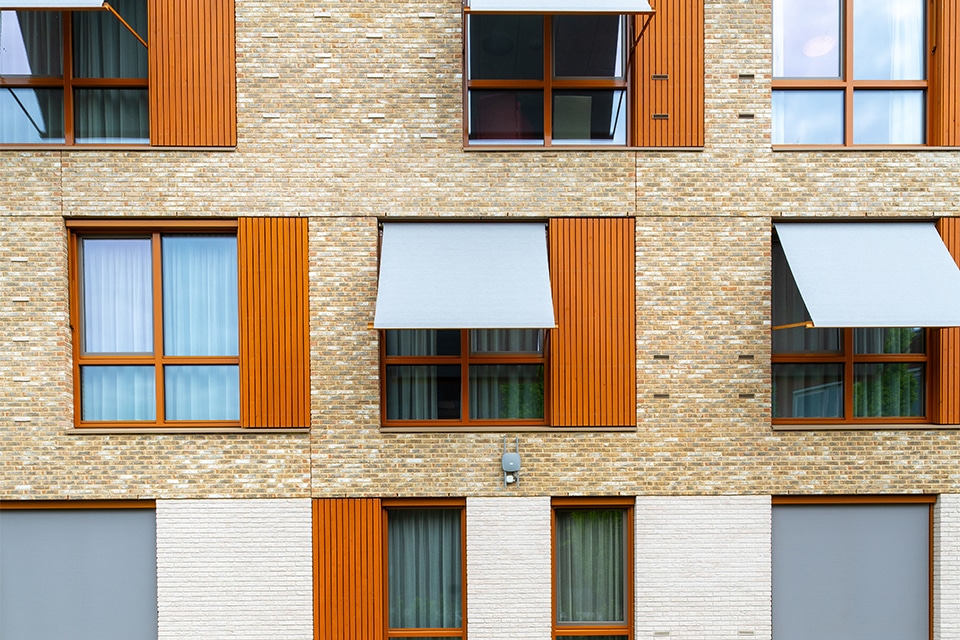
This removable design also applies to the 423 Red Grandis FSC exterior window frames. Manufacturer Vako Kozijntechniek in Bolsward and ADS developed a special removable window frame for this purpose. Vako manager Bastiaan Twellaar says: “The window frame is secured from the inside of the frame. The cavity batten therefore remains part of the building structure. Once all screws have been removed from the inside, the window frame is loose in the facade and can be easily removed for replacement, maintenance, or reuse. Space has been created between the cavity batten and the window frame, where the sealant is also applied.” This innovative facade solution has since been featured in the downloadable publication ’Demountable Construction and Remountable Detailing: Working Toward a Future-Proof Building Stock” (March 2026) by the Circular Construction Economy Transition Team and the Spring Agreement 2.0.
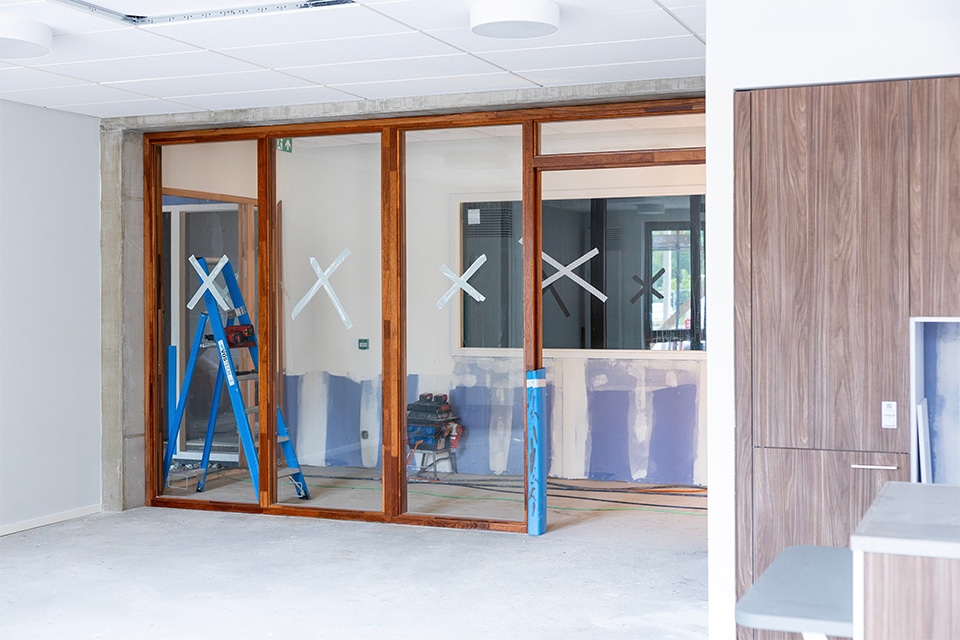
Vako also manufactured the 486 wooden interior window frames. Some of these were made from Non Komo Red Grandis FSC, and others from reclaimed merbau. That merbau was ‘harvested’ from demolition sites via Lagemaat Heerde and processed into ‘new’ window frame lumber by the Insert Foundation. Twellaar: “It was delivered in 5.20-meter lengths so we could easily incorporate it into our production process.”
Huiskes: “Reusing wood salvaged from demolition projects helps lock in stored CO2 for longer. However, reclaimed wood is still in short supply. Especially for larger projects, you can’t start sourcing it early enough.” Using reclaimed wood was a new experience for ADS on this project. Arend Jan Overbeek, Manager of Sustainable Construction, member of the Circular Construction Economy transition team, and signatory of the facade agreement, says: “By collaborating with other parties, you achieve a shared result. We want to continue applying the knowledge we’ve gained. For example, we want water boards and drinking water companies to also be able to choose wooden or wood-aluminum window frames made from reclaimed wood from harvested (or donor) buildings for their office and technical buildings. Circular construction must become the standard.”
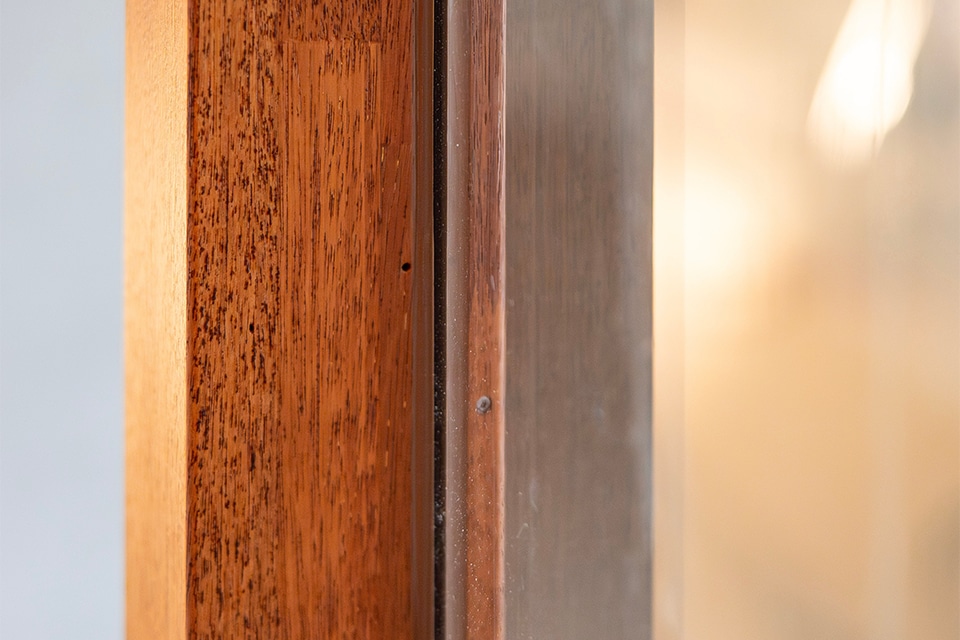
The merbau interior door frames have a clear finish to highlight the wood’s rich coloration and origin. Huiskes: “It brings the wood to life for the residents and fits perfectly with the interior’s color scheme,” says Huiskes.
Neem dan rechtstreeks contact op met Dutch Trade Association for the Carpentry Industry (NBvT).
 Contact opnemen
The Dutch Trade Association for the Carpentry Industry (NBvT) is a trade association that is primarily there for its members, combines forces and promotes interests. The NBvT supports its members in the areas of marketing, advice, networking, innovation, standards and regulations, environment, technology, personnel and organization. Together with its members, the NBvT works to further increase [...]
Bekijk Bedrijfsprofiel