Platform on window, door, frame technology, hardware, roof and facade technology, security
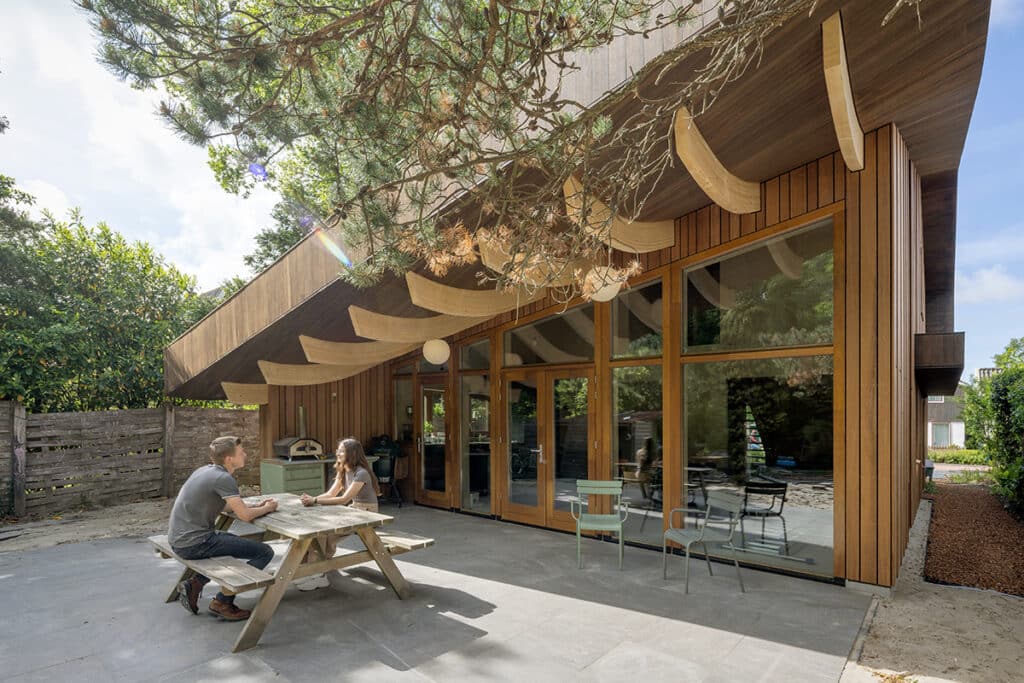
Image on project Villa Heilooërbos in Heiloo
The future of building is biobased. What that looks like when all parties involved perform at the peak of their abilities, the wooden villa on the edge of the Heilooërbos shows. The shell, facade and roof are a feast of expertly applied softwood, hardwood and bamboo. And local pine from the dunes of Bergen aan Zee was also given a place.
The wooden villa completed in 2025 on the edge of the Heilooërbos in Heiloo is unique in several ways. First of all, the different types of wood used, the roundings and the corrugated roof catch the eye. Compared to the adjacent (brick) houses with a large living room window facing south, the closed nature of the wooden street facade also stands out. Architect Natrufied Architecture from Bergen turned the house around and placed bedrooms and bathroom on the upper floor at the busy front side in order to connect the living spaces on the garden side optimally to the forest edge behind.
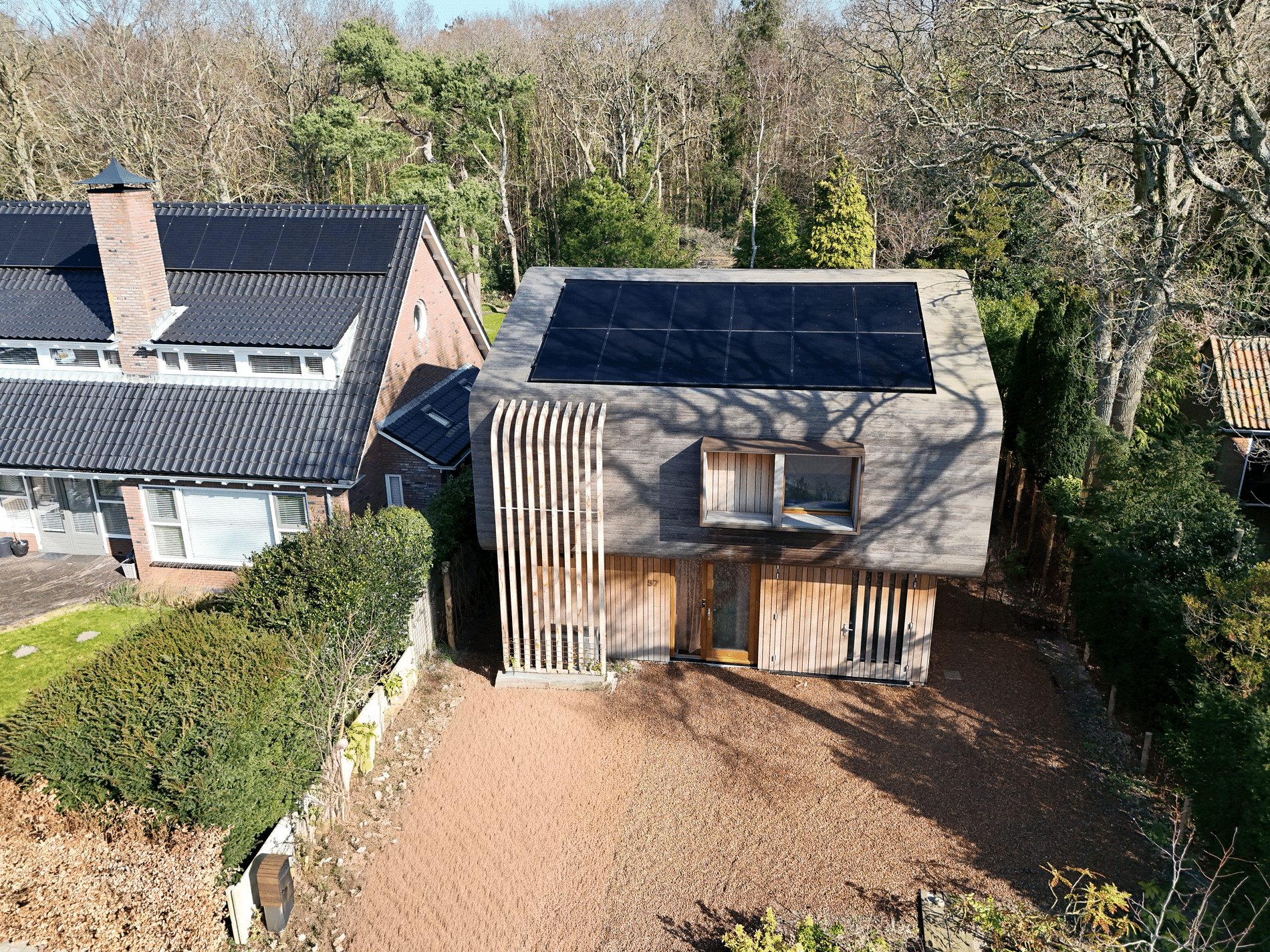
“The realization of the unique home in Heiloo was a special journey for us,” says Yvonne van der Hulst, director of Van der Hulst Bouwbedrijf in Lisse. The company embraced sustainable building as a founding partner of Active House Netherlands in 2013. “We focus on comfort, energy and the environment and put the end user of the home at the center. Biobased and vapor-permeable timber construction in accordance with Bouwbesluit+ is for us ‘the new normal’ of building. If we have the choice, we only want to do wood construction.”
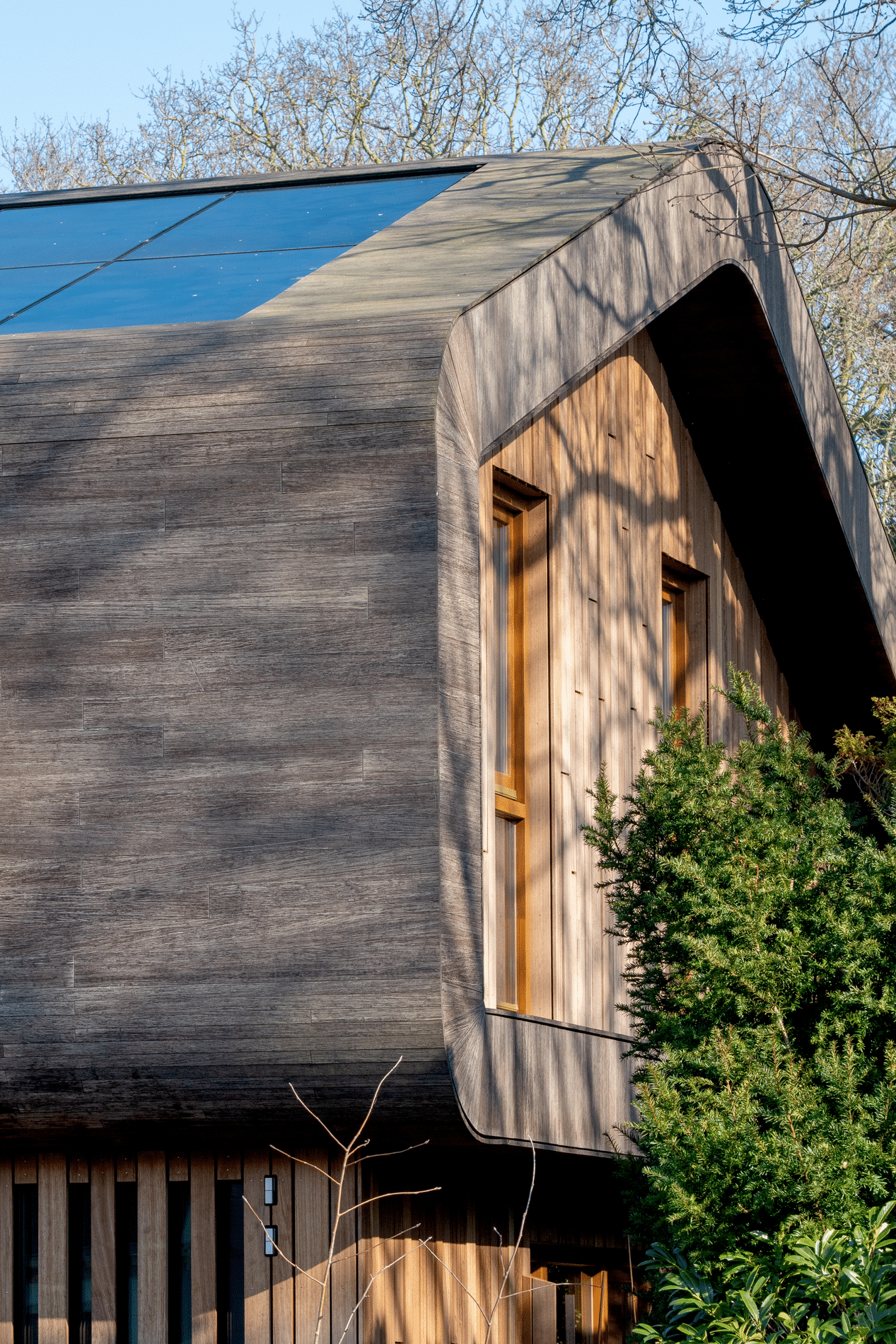
The main load-bearing structure of the villa consists of a combination of wood-frame facade elements, CLT walls and floor, and laminated wood trusses. The cladding is made of FSC-certified iroko hardwood and bamboo. The insulation in the vapor permeable facade consists of wood fiber. Extra special is the use of local pine directly from the dunes of Bergen aan Zee. Van der Hulst: “On the North Holland coast near Bergen, but also in the Amsterdam water supply dunes, thousands of pine trees will be removed in the coming years to make way for heath and shifting dune landscape. After sawing, drying and strength classification measurements by a sawmill, this is excellent lumber to use.”
Director Rob Dekker of Houtbouw ’t Zand is the producer of the timber frame elements incorporating the Bergen pine. He says, “The twisted roof was worked out completely in 3D. I wanted to make sure it would fit, but that's no problem with modern production techniques. The CLT is all vision work, so assembly requires velvet gloves to avoid damage. In the end, the CLT and hsb airframe and hoods were assembled in three days.”
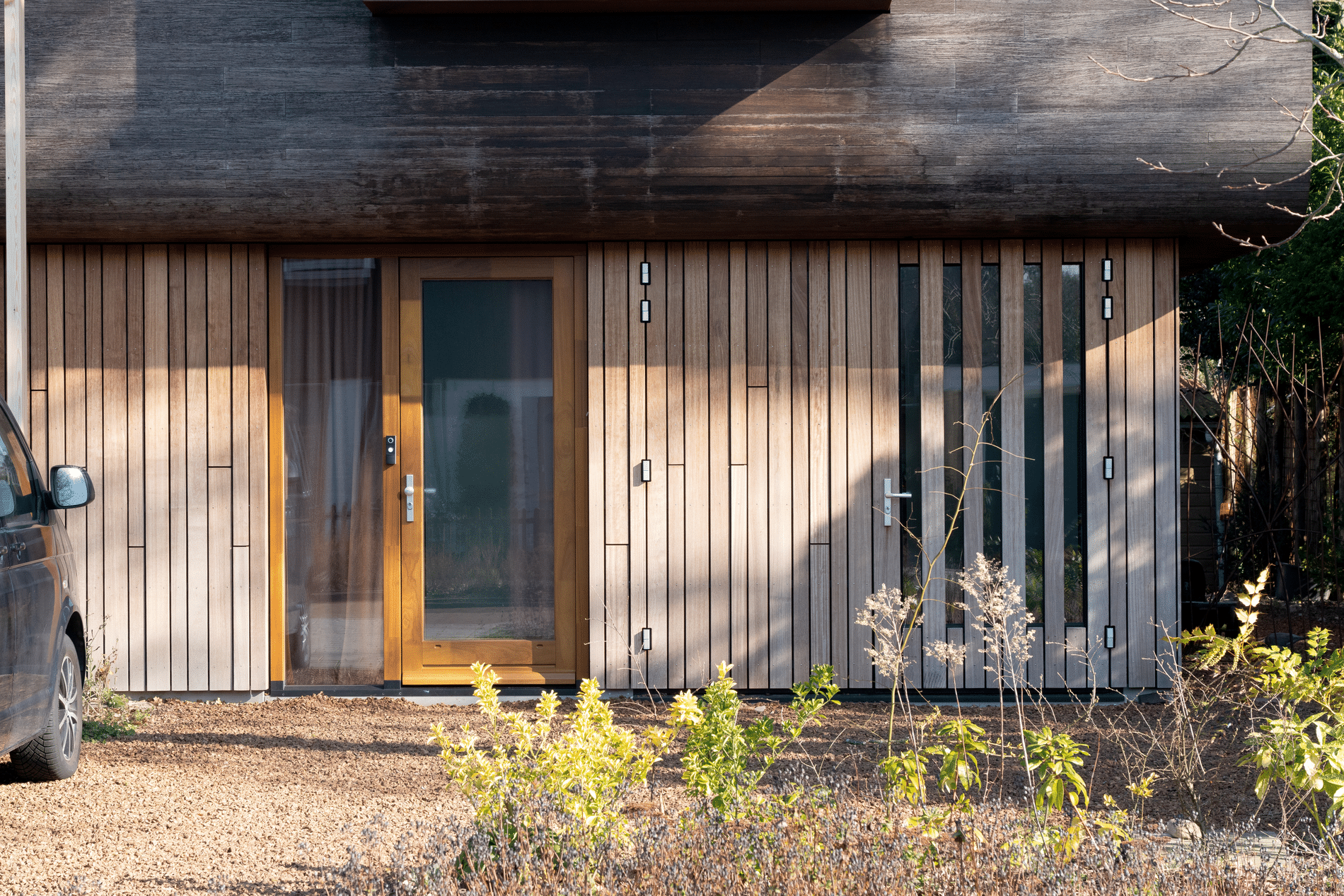
Timmerfabriek Para BV in Nieuw-Buinen produced a total of nineteen window frames and seven doors for the villa, some 60 square meters. Director Richard Paas says, “The wooden window frames of optimized iroko are finished transparently with a pigmented lacquer and glazed in the work with triple glass.” At the rear, Para realized a technical masterpiece by providing ample views of the Heilooërbos behind the house across its entire width. Multiple connected 90 cm wide iroko window frames with sloping lintels up to the 5.40 m high eaves frame an impressive panoramic view. “The CNC technology we use to produce our window frames allows the frames to fit together seamlessly,” said Paas. The window frames are produced under KOMO guarantee.
Yvonne van der Hulst: “The process required time and effort. Especially the semicircular facade and the sloping roof were a real challenge for our own carpenters. But precisely because of this, we are all the more proud of the final result. We have built a sustainable, aesthetic and future-proof house here that is completely in balance with its surroundings.”