Platform on window, door, frame technology, hardware, roof and facade technology, security

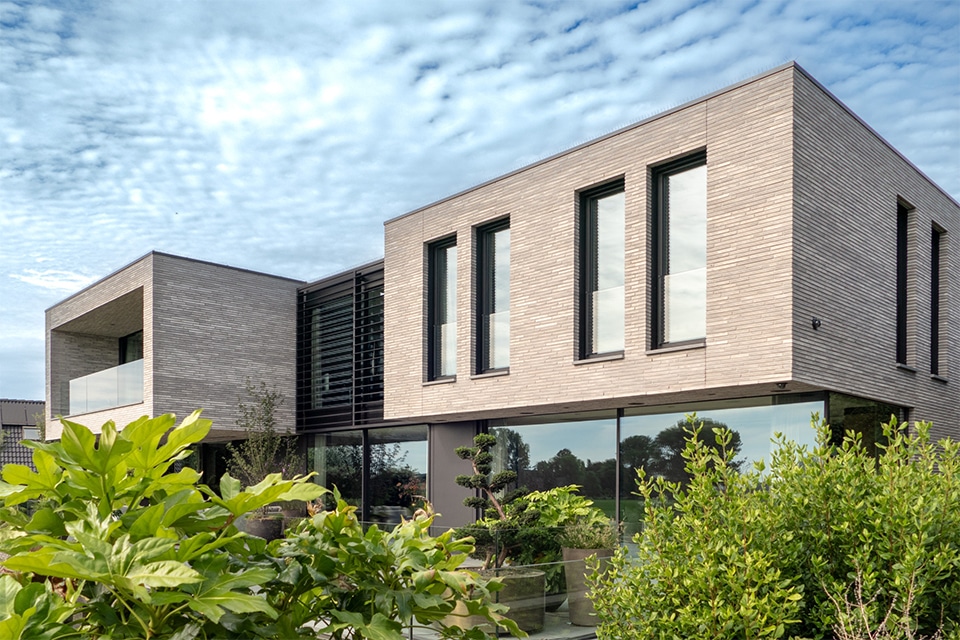
Modern windows still resemble conventional windows in appearance and corner joints, but the profiles are becoming slimmer and the glass area larger. This presents challenges for the window manufacturer. With the CENTATEQ S-800/900 machining center, HOMAG developed a solution for optimally clamping and precisely machining all profiles for window production. The German machine manufacturer is synonymous with quality and innovation and, together with its distributors, such as the Optimat Group for the Benelux countries (Vens & Thiers/Klingelnberg-Klauss), ensures professional installation, personal training of operators and smooth commissioning.
In order to accurately make corner joints and infill cuts for hardware, as well as to perform all other necessary operations, the profiles must always be securely clamped during window production. In addition, manufacturers want fully automated production to increase flexibility and productivity on the shop floor. Consequently, window manufacturers are looking for machining centers that meet these criteria.
With CENTATEQ S-800/900, HOMAG offers a machining center, which guarantees smooth and precise machining of all possible profiles. To compensate for the elimination of the so-called 8 mm pressure zone for clamping slender profiles, the machine builder developed an alternative with folding clamps, in which the workpiece is secured throughout machining. The use of folding clamps is relevant not only for new windows, but also when renovating monumental window systems, for example. Here is the appropriate time to clamp filigree so that other parts of the window, such as water drainage profiles, can also be machined on the machine. Not only the width, but also the length plays a role here. A length of less than 175 mm is no exception here, which is why pieces up to 114 mm can be clamped and machined on this HOMAG machine without any problems.
The variety of profiles and operations in window production has increased significantly over the years. Since profiles are nowadays automatically controlled from the drawing in most companies, tool changes are no longer done manually either. The tool magazine determines whether tools with the necessary diameter for profile machining can be integrated. With its tool tower, HOMAG conveniently responds to this.
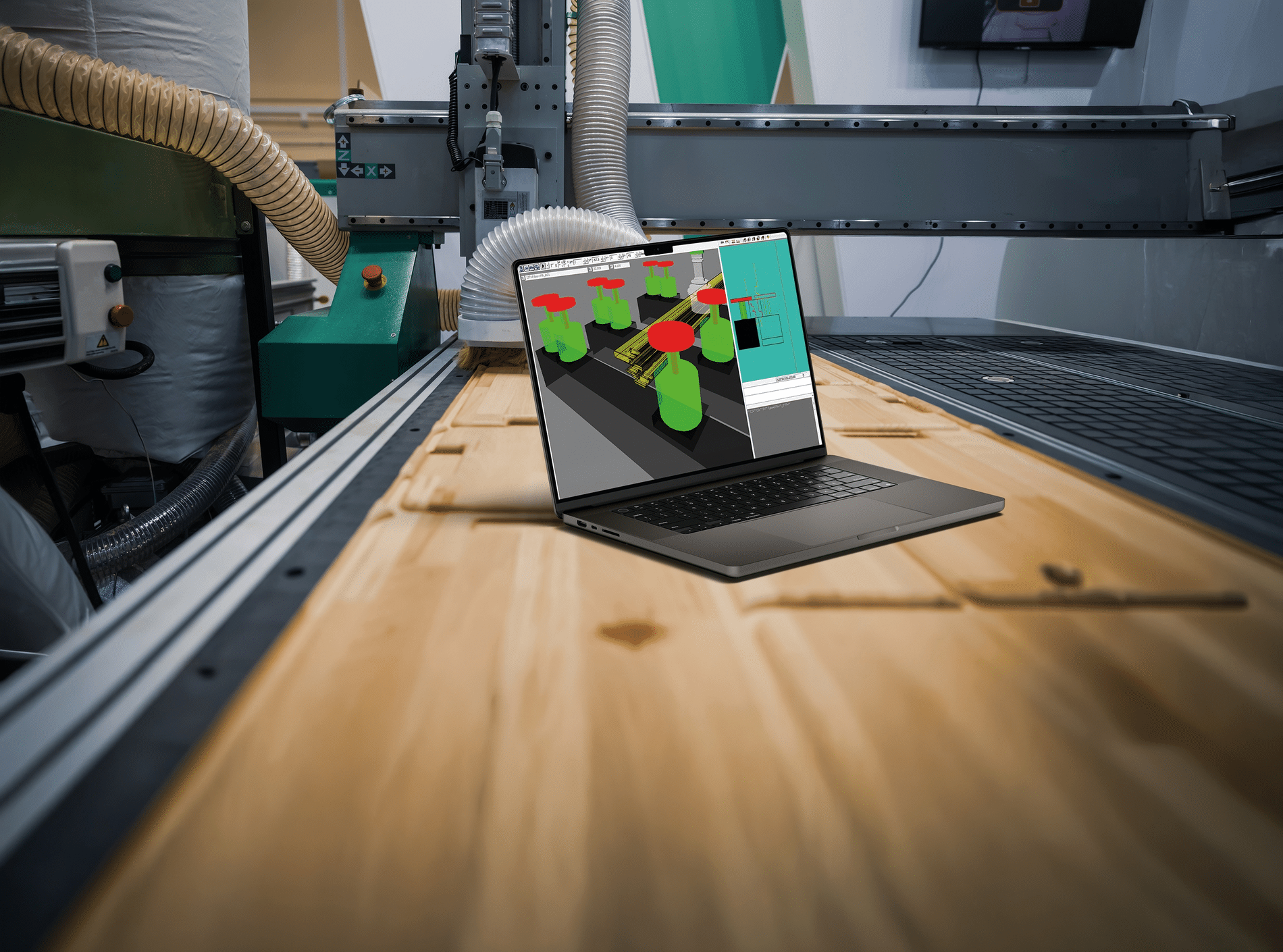
Corner joints remain crucial for window strength anyway. The standard choice used to be a tongue-and-groove joint, but today many variants are used. HOMAG's machining center is capable of producing almost any specific angle connection, as its flexible control system can easily visualize them. Complex corner joints are generated with woodWOP from HOMAG. Thanks to this window software, the customer can program and produce single pieces or special workpieces on HOMAG's machine without any problems. After all, the software communicates smoothly with the machines, making the investment in an additional package unnecessary.
HOMAG tailors each installation to the customer's needs. For example, for the production of more than 60 windows, i.e. more than 500 parts, a combination of machines is proposed. After all, extremely large machines are a thing of the past. HOMAG invests in the quality of the machines, but together with its distributors, such as the Optimat Group for Benelux (Vens & Thiers/Klingelnberg-Klauss), also in precise installation and personal training of the operators. This allows the customer to start up his machine without any problems and downtime is reduced to an absolute minimum.