Platform on window, door, frame technology, hardware, roof and facade technology, security
Direct link between engineering and production
During the renovation of the Leiden University Library building, the two striking roof domes with skylights are also being addressed. HiCAD software forms the digital backbone of this complex renovation project: from analysis of the existing situation to engineering, production preparation and execution. “Without the use of HiCAD, this project could not be realized in this form,” emphasizes Mike Strik, project engineer at Kingspan Light + Air.
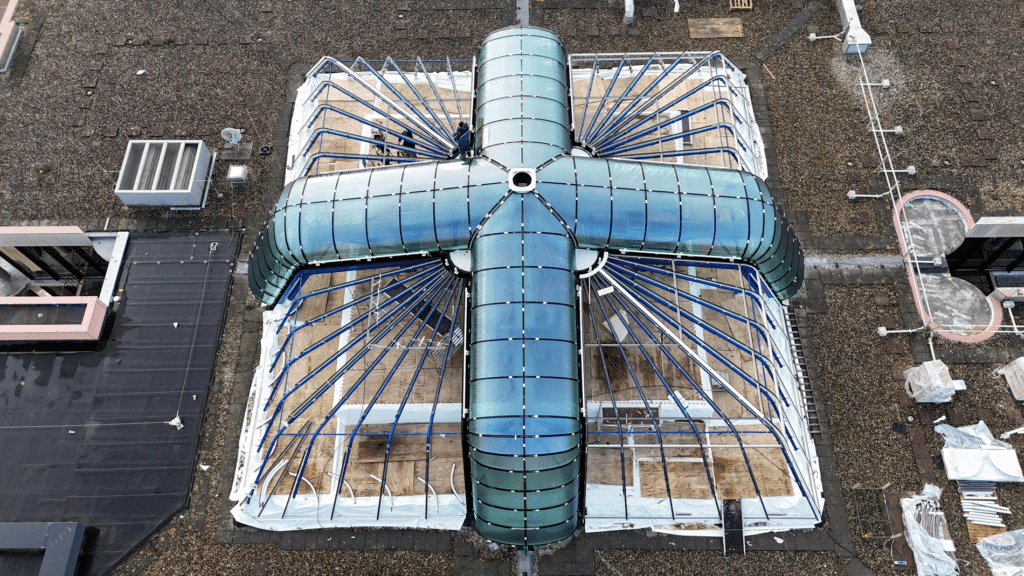
The University Library does not have monumental status, but it approaches that architecturally, according to Koen Akkermans, project manager at Kingspan Light + Air. “The existing domes and skylight had long been struggling with leaks and no longer met today's requirements energetically. The client's wish was clear: a completely new and better-insulated dome, retaining the existing shape but adapted to today's requirements and made of glass instead of polyester. This intervention is radical: the existing structure is completely stripped down to the steel structure, which forms the starting point for the new design.”
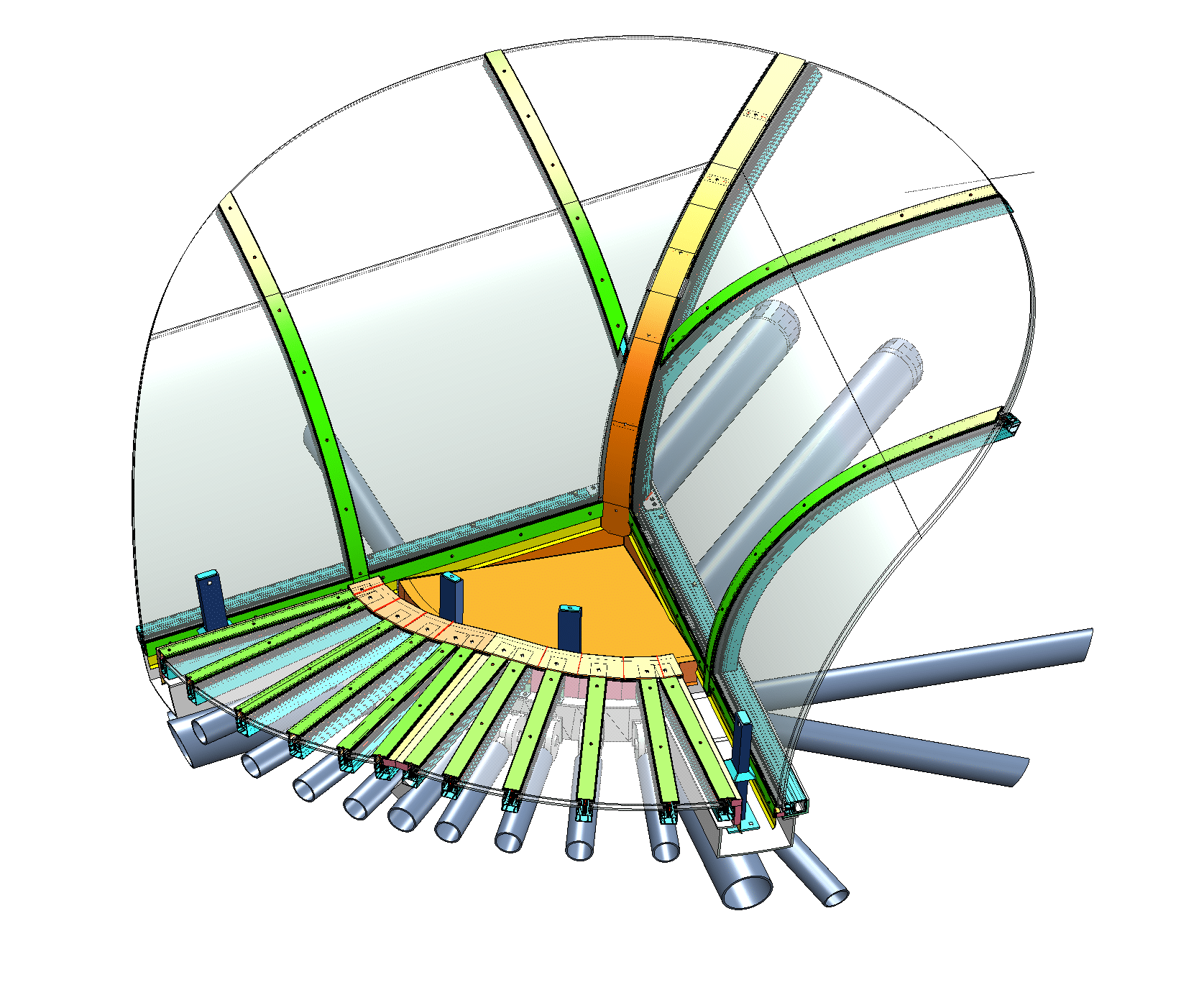
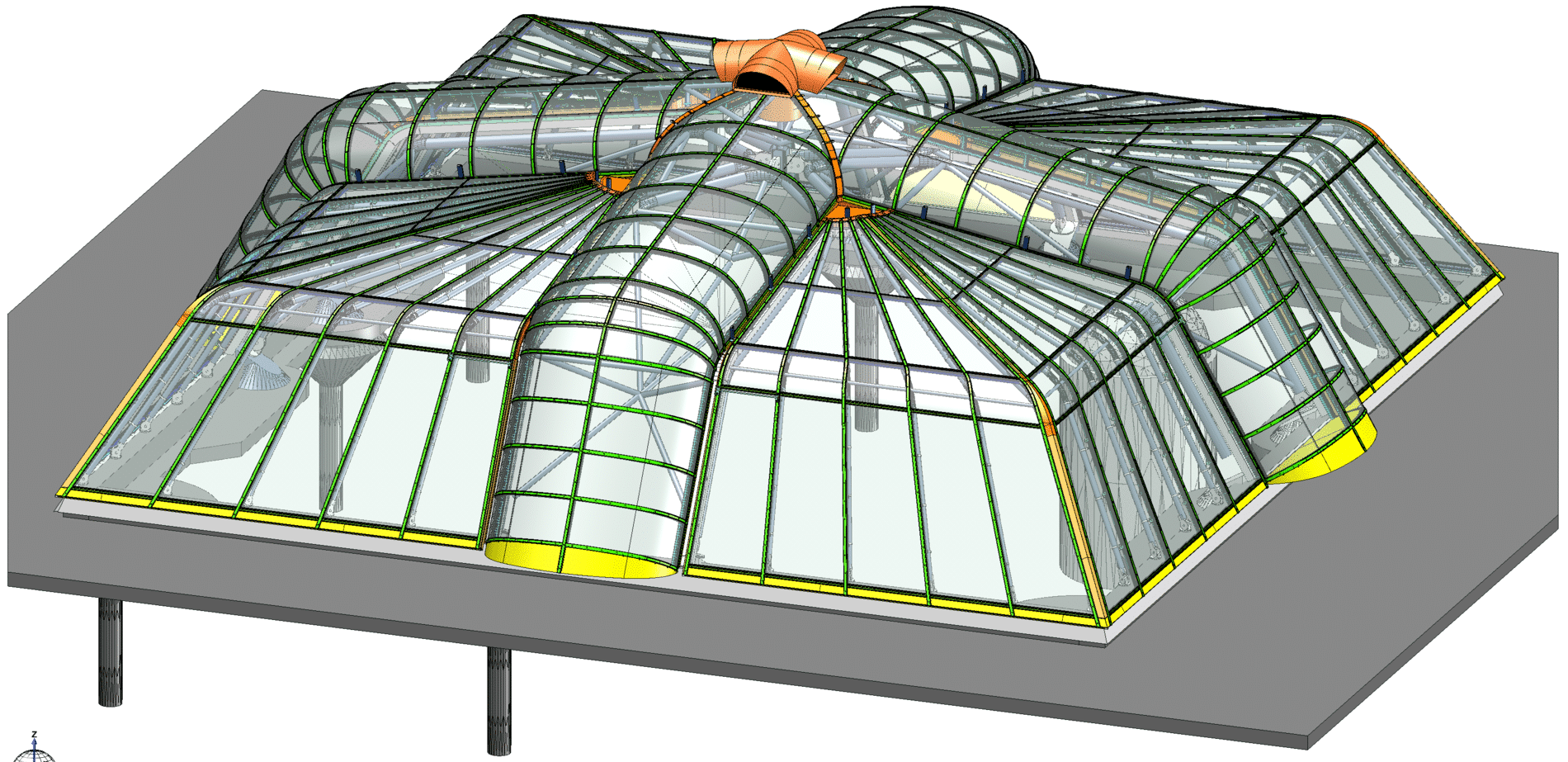
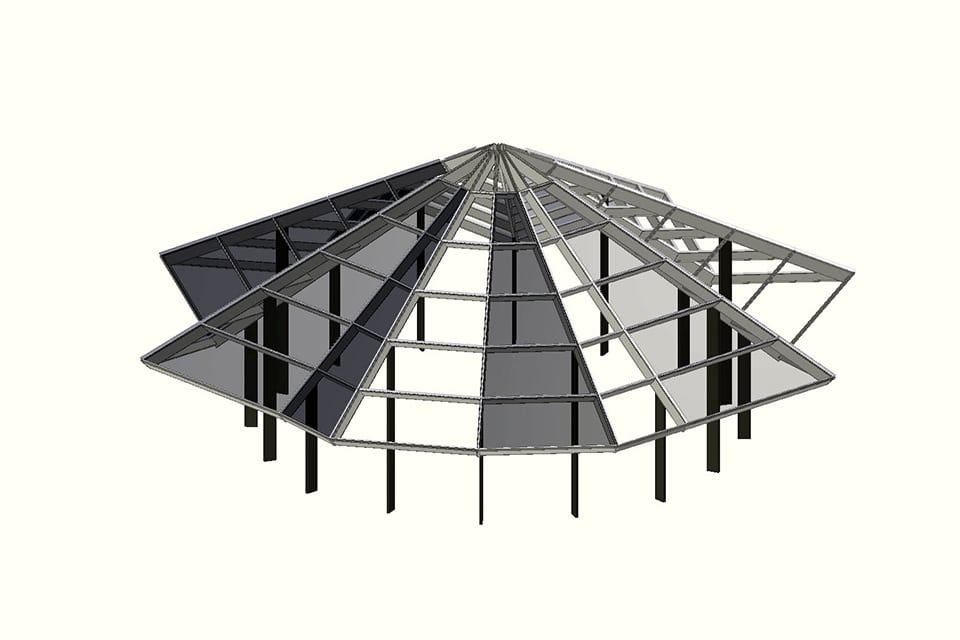
A 3D scan was made of the steel structure, which was further developed into a structural model. “This model was converted to IFC and loaded into HiCAD,” Strik explains. With this, HiCAD became Kingspan Light + Air's central platform for the further engineering of the new roof domes. In the software, the team was able to accurately analyze how the steel structure was constructed and whether any major discrepancies were present between the two domes. “By studying the model in three dimensions, it became clear that both domes were identical within an acceptable range. This knowledge was crucial for further elaboration.”
In HiCAD, the entire aluminum support structure with glass was then modeled over the existing steel structure. “The original shape of the domes was retained, but the facade layout was optimized with fewer cross sections and a more open appearance,” says Akkermans. “Furthermore, the existing polyester ridge piece is also replaced with glass. Small differences in dimensions between the two domes we manage to accommodate in the detailing, using an intermediate construction in the adjustable brackets.”
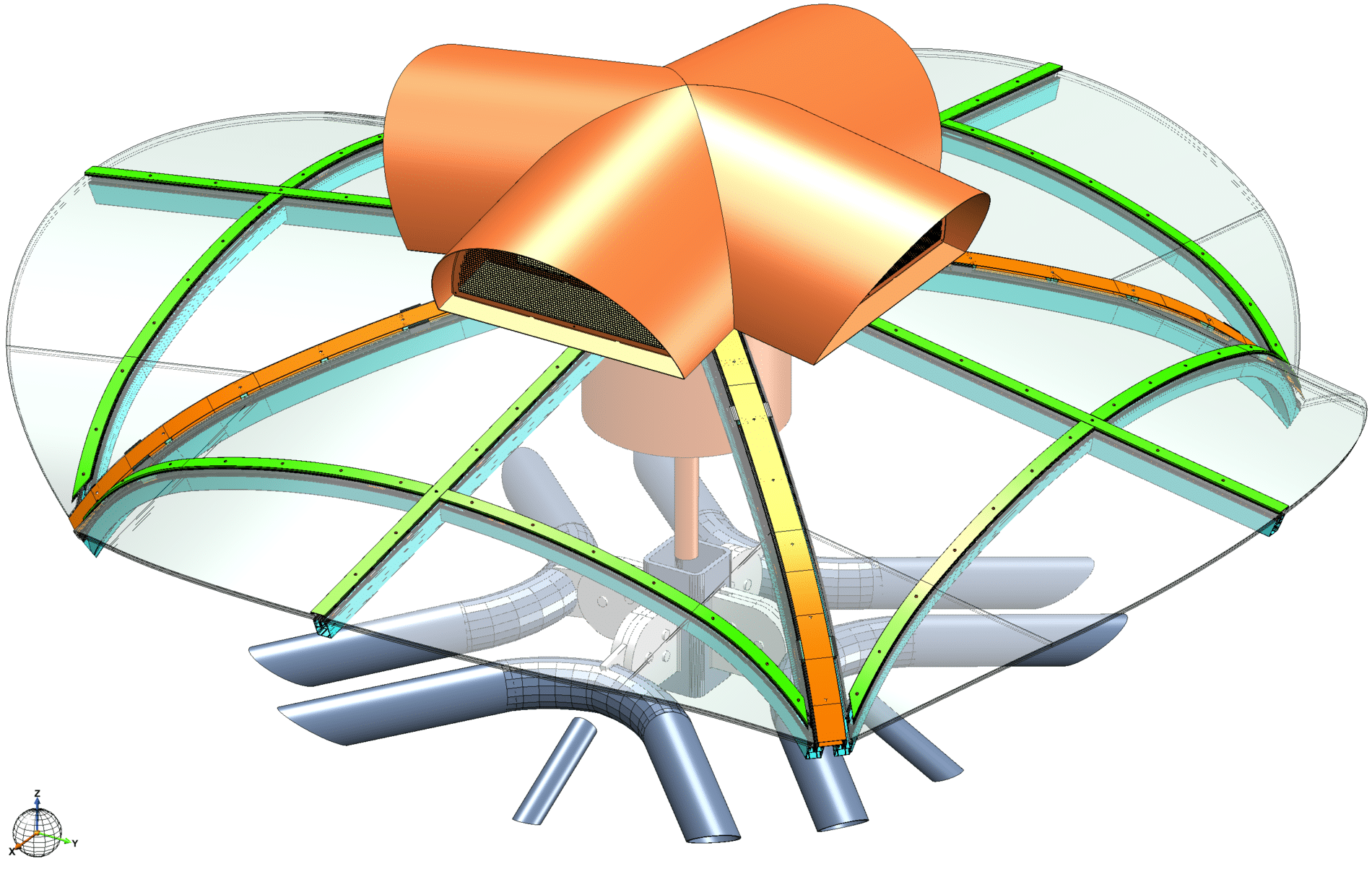
According to Strik, the biggest challenge lies in the complex transitions, such as the twisted corner pieces and the glass connections in the ridge. ’By carefully modeling these details in HiCAD, we know how to optimally align the various tolerances of the glass supplier and profile bender, among others, and thus guarantee watertightness. This was also demonstrated in advance in a mock-up. In addition, we also optimized the ventilation to efficiently dissipate excess heat from the domes.“
An important advantage of working with HiCAD is the direct link between engineering and production. “The final model is used to control machines for sheet metal and profile machining. HiCAD's extensive sheet metal module that includes settlements, tolerances and complex geometries proved essential for this project with its bent, double-bent and twisted profiles. With our previous software, this would definitely not have been possible,” Strik emphasizes. “From the model, parts lists and ‘bill of materials’ were then automatically generated, which are read into the calculation tool. This provides quick insight into quantities, time expenditure and costs, after which production and execution can take over the project in a controlled manner.”
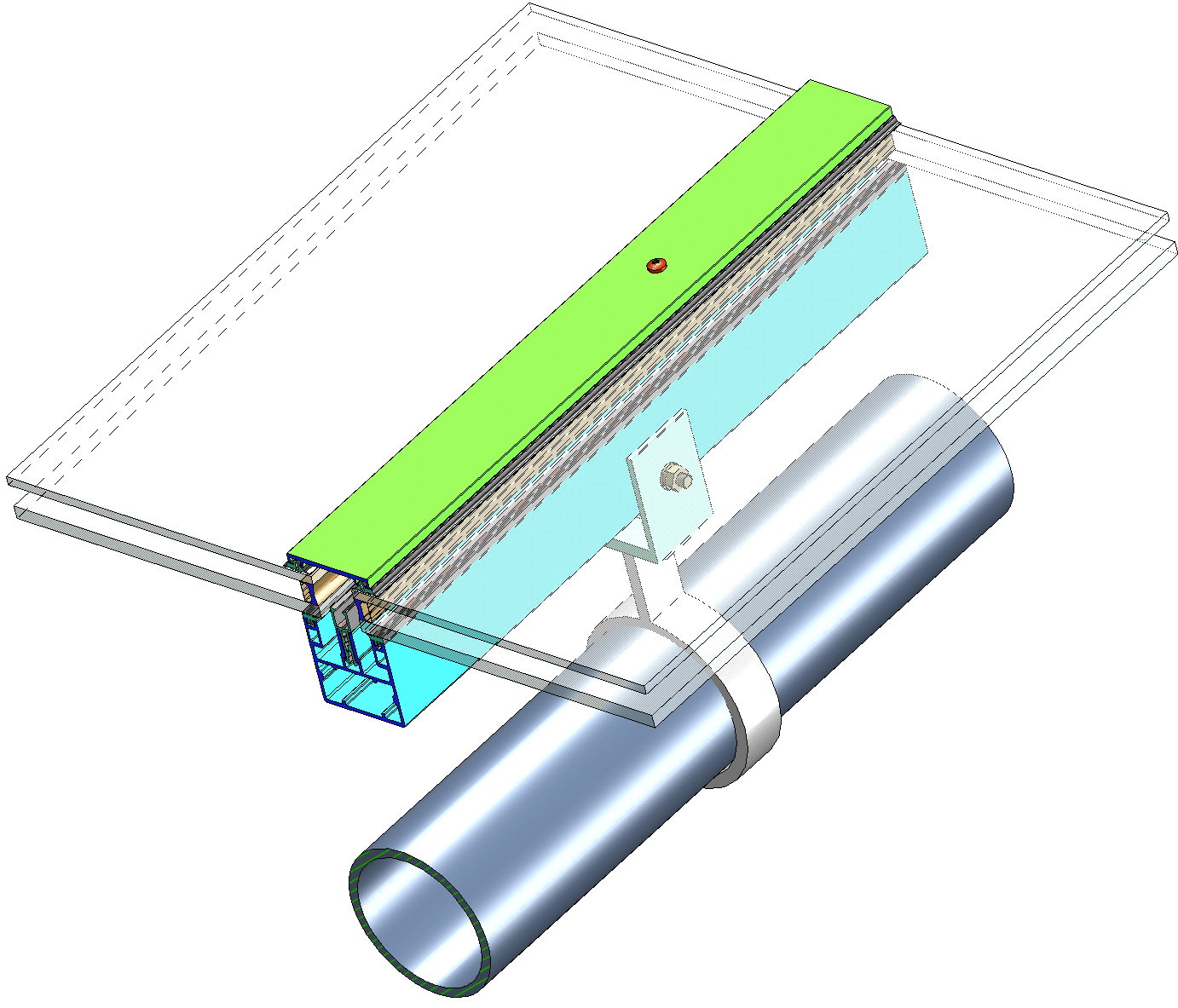
With the renovation of the roof domes and skylight, Kingspan Light + Air demonstrates that HiCAD is much more than a drawing program. It is an integral design tool that brings analysis, engineering, production and execution together, making it essential for realizing this type of complex renovation task. The project is now underway and is scheduled for completion in April.