Platform on window, door, frame technology, hardware, roof and facade technology, security
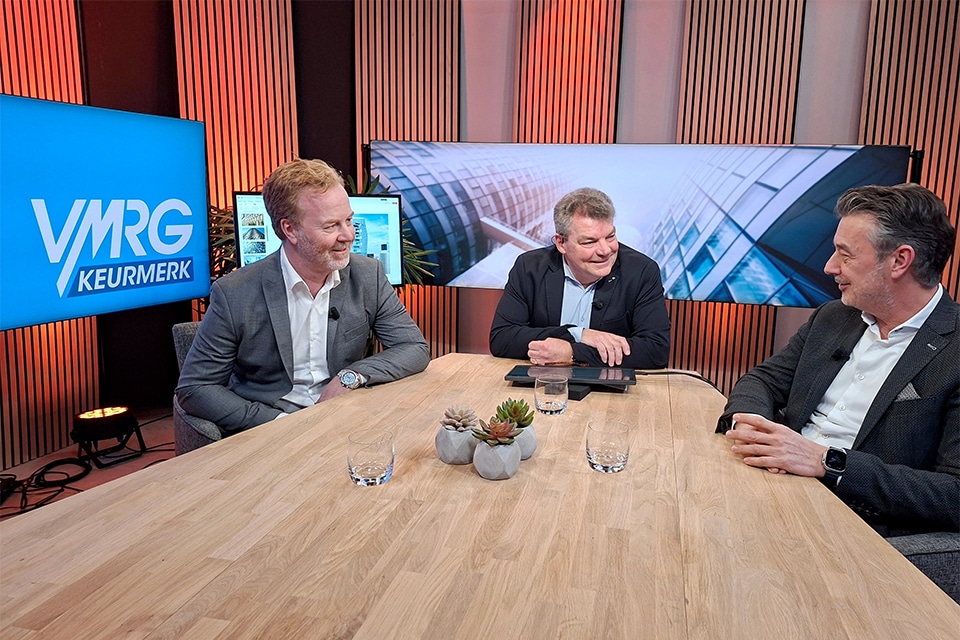
On November 26, the VMRG hosted the online Expert Session ‘The Power and Future of Anodizing. Anodizing transforms, protects and decorates facade aluminum. This session provided insight into the process, quality, color and the latest developments. Henk Zoontjens, director VMRG, discussed this with Remco Baartmans, CEO at Alumet, and Jacco van Dijk, general manager at Blitta Geveltechniek.
Remco Baartmans: “Anodizing is an electrochemical process in which we give aluminum an extra strong and durable protective layer. We place the aluminum in an electrolytic bath, usually with diluted sulfuric acid, and run an electric current through it. That process changes the surface of the aluminum itself, creating a hard, transparent oxide layer. That layer forms one with the metal, which is now much more resistant to weathering, corrosion and UV radiation.”
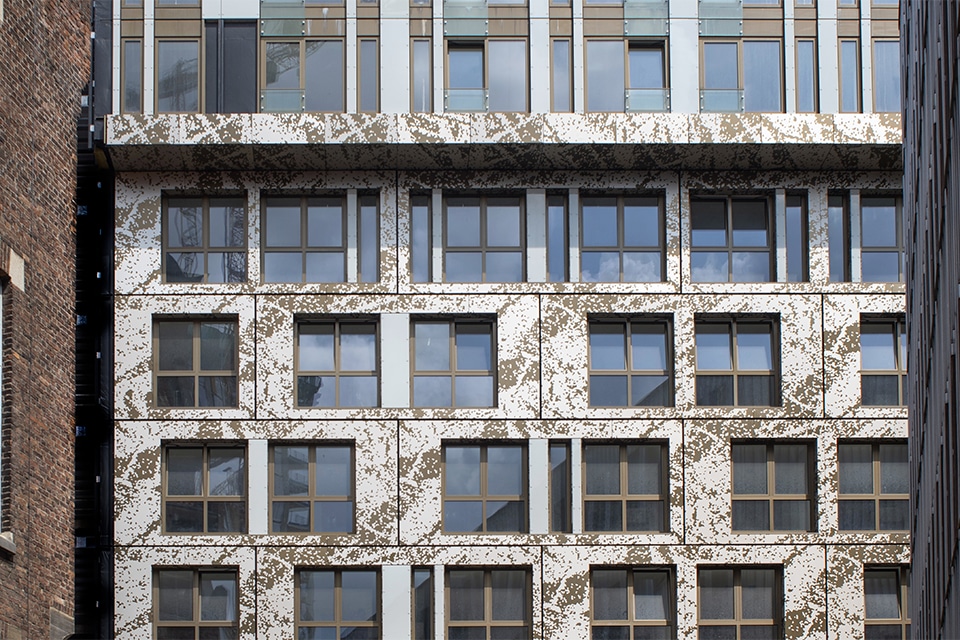
Jacco van Dijk: “The process makes it one with the metal, it's alive, it exudes luxury and I understand that architects like it and it fits in with the current way of designing. What you do see is that people are not always aware of certain properties of anodizing and also do not always have an accurate picture of what it will eventually look like, and of course there is also a price tag. So above all we have to manage expectations so that a customer knows at an early stage what he is buying.”
Remco Baartmans: “An important trend in architecture is ‘Truth to Materials.’ The character of metal the architect wants to preserve in the design they create.”
Jacco van Dijk: “Anodizing is often chosen for buildings with a higher aesthetic value, such as public buildings and office buildings, with investors who value this. But also for high-end residential buildings, such as luxury apartment buildings. You see it a lot with high-end architects where the design is exclusive and chic.”
Remco Baartmans: “An architect always starts with the desired color. Many people think of classic silver when they think of anodizing, but you can color the material in all sorts of shades, from light champagne to deep black, and everything in between. That coloring is done in two ways: electrolytically or with inorganic metal salts.”
Jacco van Dijk: “Of course, as a facade builder, we are very much in the business of window frames. So you're talking about profiles with pull marks, which are allowed within certain tolerances. Anodizing, especially with those golden colors, makes these stripes a little more visible. Also, a vertical style and a horizontal rule can already differ in color, purely due to light penetration. If there is then also an aluminum plate with a different alloy, you therefore optically get three or four colors. We make a mock up in such cases, so that a customer can see exactly what the result will be.”
Remco Baartmans: “The color is influenced by alloy, surface structure and anodizing parameters. Anodizing does well on accented facades, with a lot of depth in the facade. If I talk to the architect and I get the impression that he wants one color on the facade, I advise him against anodizing. Preventing color differences is difficult, but limiting them is certainly possible. In fact, color differences are optical gloss or light differences. By proper pretreatment, such as etching, brushing or blasting, you can limit or sometimes even prevent them.”
Jacco van Dijk: “It is of course important that a facade builder also knows these possibilities and can advise well. But what we also have to manage well is the expectation regarding the price. Extra operations cost extra money. In short, we must not only talk about all the possibilities in advance, but also discuss at an early stage how this will affect the price. It is also a supply and demand game, the architect often wants the very best, while the developer of course also looks at the price.”
Jacco van Dijk: “During construction, you have to prevent cement water from getting on the anodized aluminum. After completion, in urban and coastal areas you suffer from air pollution, acids and salts. Cleaning agents with the wrong pH or bird droppings can also damage the surface.”
Remco Baartmans: “Nowadays, we are increasingly working with an advanced sealing technique, also called a pre-seal process. This is actually an optimization of sealing itself. Instead of just sealing the pores with hot water, a protective reaction is stimulated within those pores. This creates a much denser and more stable seal of the anodic layer. The result is that the aluminum is much more resistant to chemical influences, whether that be air pollution, acids, salts or building contaminants.”
Neem dan rechtstreeks contact op met VMRG.
 Contact opnemen
The VMRG is an association of facade builders that, through cooperation with its partners in the industry, strives to achieve optimal comfort for the end user. Through continuous product and process improvement, innovation, training and service, the long-term value of buildings is guaranteed. CORE VALUES The VMRG has four main core values: 1. MANAGEMENT OF THE VMRG LABEL As a [...]
Bekijk Bedrijfsprofiel